Neurofeedback Therapy in Scottsdale
At Redefine Wellness & Treatment in Scottsdale, we use neurofeedback to train the brain toward healthier, more regulated patterns within our PHP and IOP programs. Guided by qEEG brain mapping and paired with EMDR, somatic therapies, and a full clinical team, neurofeedback here works inside a treatment program, not in place of one.
- Joint Commission Accredited
- qEEG-Guided Protocols
- Root-Cause Treatment
- Body + Brain + Mind Approach
Neurofeedback Therapy in Scottsdale, Arizona
Neurofeedback at Redefine Wellness & Treatment in Scottsdale doesn't work like a standalone brain training clinic. Every protocol starts with a qEEG brain map and runs alongside EMDR, somatic therapies, and a full clinical team inside a structured program. Your brain learns to self-correct while your clinician adjusts training based on how your nervous system responds across all modalities.
-
Guided by Your Brain Map. Your qEEG recording tells your clinician exactly where brainwave patterns are dysregulated. Training targets come from your data, not a generic protocol.
-
Paired With EMDR and Somatic Work. Neurofeedback stabilizes brain patterns. EMDR and somatic therapies process what drove the dysregulation. Together they address both sides.
-
Part of a Coordinated Treatment Plan. Your neurofeedback technician works alongside your therapist, psychiatrist, and full clinical team. Every session connects to your broader clinical picture.
Neurofeedback is one modality within individualized treatment plans built around your specific brain map and clinical presentation.
At a Glance
- Brain-Based Programs
Neurofeedback at Every Level of Care
Neurofeedback Within PHP
PHP is where neurofeedback has the most impact. Clients train five days per week, and because you're on-site for the full treatment day, your clinician can observe how each session lands and adjust protocols in real time. A qEEG brain map is completed before your first session. EMDR and somatic work run alongside neurofeedback so the brain is stabilizing while trauma is being processed by the same clinical team.

Neurofeedback Within IOP
In IOP, neurofeedback sessions happen three times per week, still a significant increase over the once-weekly frequency most standalone clinics offer. IOP works well as a step-down from PHP or for clients whose schedule requires flexibility without losing clinical precision. Your protocols use the same qEEG-guided approach as PHP, your clinical team still coordinates neurofeedback with EMDR and group work, and repeat brain maps track whether the patterns identified in your initial recording are actually shifting.
Neurofeedback in Private Retreats
Private retreats compress the neurofeedback timeline into an immersive, individually scheduled experience. A qEEG brain map is completed on day one and training begins immediately. Clients receive daily neurofeedback alongside intensive EMDR and somatic work in a private, one-on-one format. This option is designed for people traveling to Scottsdale for treatment, executives who need accelerated stabilization, or anyone whose schedule requires a condensed format without sacrificing clinical depth.
- Brain-Based Programs
The Neurofeedback Process at Redefine
Your Brain Gets Mapped First
Your clinician records electrical activity across 19 scalp sites in a 30-minute qEEG session. The result is a detailed picture of where brainwave patterns are dysregulated.
Your Protocol Is Built Around Your Map
If the map shows excess fast-wave activity in the frontal lobe, common in anxiety and hypervigilance, training targets that pattern directly. If it shows underactivity linked to focus or mood, the protocol addresses that instead. No two protocols look the same.
Your Brain Trains in Real Time
Sensors on your scalp monitor brainwave activity while you watch a visual display. When your brain produces the target pattern, the feedback responds. When it drifts, the feedback pauses. The learning happens below conscious effort.
Progress Is Measured, Not Assumed
Repeat qEEG brain maps at intervals during treatment track objective changes in brainwave patterns. You and your clinician can see whether the dysregulation is actually shifting. If it's not, the protocol adjusts.
Neurofeedback doesn't add anything to your brain. It gives your brain real-time information about its own electrical patterns and lets it learn to self-correct. The training is the brain recognizing itself more clearly.
- Problems EMDR Solves
Neurofeedback & The Brain & Nervous System
Conditions Neurofeedback Can Address
- Anxiety disorders — including generalized anxiety and panic-level activation
- Depression — particularly patterns tied to frontal lobe underactivity
- PTSD — including trauma-related brainwave dysregulation patterns
- Complex trauma and developmental trauma from childhood
- Bipolar disorder — brainwave instability across mood states
- Emotional dysregulation tied to nervous system instability
- ADHD and attention-related brainwave patterns
- Sleep disorders rooted in cortical hyperarousal
Signs Your Brain May Be Dysregulated
- A mind that won't quiet down — racing thoughts, looping worry, or mental noise that doesn't match the situation
- Chronic fatigue or brain fog that persists even with adequate sleep and no medical explanation
- Emotional reactions that feel disproportionate — snapping, shutting down, or flooding over minor stressors
- Difficulty falling or staying asleep, or waking in the early hours with a cortisol-driven alert response
- Attention that scatters under low demand but hyperfocuses under pressure, a pattern common in ADHD
- A nervous system stuck in fight-or-flight — elevated heart rate, shallow breathing, muscle tension at rest
- Medication that manages symptoms but hasn't resolved the underlying pattern driving them
- Feeling wired and tired simultaneously — your brain can't settle but your body is running on empty
- Treatment Plans
How Neurofeedback Is Integrated in the Outpatient Schedule
This is a sample PHP week, not a fixed schedule. Your clinical team builds your plan around your specific brain map and presentation. Neurofeedback runs daily; the supporting modalities shift as your nervous system responds.
- Treatment Plans
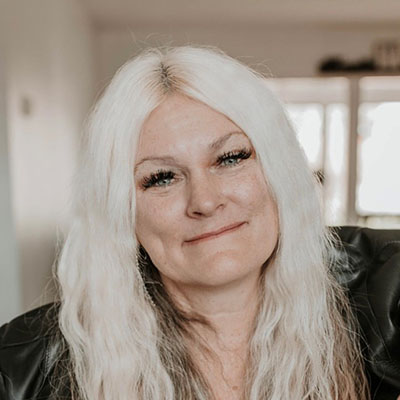
Our Neurofeedback Therapists
Kim Miller
Licensed Clinical Social Worker · Licensed Independent Substance Abuse Counselor · Somatic Experiencing Practitioner · Founder, Neurofeedback AZ
Kim founded Neurofeedback AZ and brings 27+ years of clinical experience combining neurofeedback and qEEG brain mapping with trauma-informed psychotherapy. A doctoral student in neuropsychology, she focuses on helping clients move beyond symptom management toward deep, sustainable neurological change.
View Full Profile

Brenna Gonzales
Licensed Professional Counselor · Somatic Experiencing Practitioner · Certified Multiple Addictions Therapist
Brenna coordinates neurofeedback with EMDR and somatic experiencing so that brain stabilization and trauma processing reinforce each other across your treatment plan, working at both the cognitive and physiological level.
View Full Profile1 of 2
Real Connection, Support, & Healing
Our Scottsdale outpatient programs combine innovative neuroscience with proven therapeutic approaches.
More Therapies, Better Outcomes
Neurofeedback doesn't work in a vacuum. At Redefine, it sits inside a coordinated treatment plan that pulls from clinical and holistic modalities selected to reinforce what your brain is learning in each session. Your clinical team builds the combination around your qEEG results and clinical presentation, not a preset checklist.
Every modality listed here can work alongside neurofeedback within your individualized treatment plan.
Browse More Modalities
Trauma Processing
Brain-Based
Psychotherapy
Body & Nervous System
Holistic & Wellness
Clinical Support

- Testimonials
Healing in Their Own Words
“They made me feel at ease and understood.”
Chris Stonewall
“ Love the red light therapy!!”
Christine Driscoll
“Best Red Light Therapy in my LIFE!”

Dan Selmasska
“Laura is an excellent practitioner”

Dr. Jasmine
“What a blessing to have found and participated in treatment at Redefine Wellness.”
jen cutler
“I have never experienced such a professional and caring staff.”
Hunter Bratt
“The staff is so friendly and the facility is clean. ”

Gwen Johnston
“I love this facility. I have been doing Red-light therapy here for several months. ”

Robert Blume
“I was lost, unable to stand up for myself and stuck in anxiety.”

Presley Petersen
“The wellness center is stunning and the whole team has been very kind and helpful.”

Mackenzie Korus
“I’m so happy to say I would 100% recommend this place over and over”

briana medley
“The staff here are wonderful and compassionate. I definitely recommend this clinic!”
Beaunerism
“Receiving treatments here was 100% a game changer, I strongly recommend!”
Jae Sheck
“Highly recommend if you’re looking for something focused and personal.”
Scott Forbes
“Highly recommend!”
Jenna Wolf
“The entire staff at Redefine is amazing. ”

Brittany Whitley
“The staff is incredible—super friendly”

Jon Driscoll
“A beautiful location with wonderful staff”
Matt Sheehan
“They made me feel at ease and understood.”
Chris Stonewall
“ Love the red light therapy!!”
Christine Driscoll
“Best Red Light Therapy in my LIFE!”

Dan Selmasska
“Laura is an excellent practitioner”

Dr. Jasmine
“What a blessing to have found and participated in treatment at Redefine Wellness.”
jen cutler
“I have never experienced such a professional and caring staff.”
Hunter Bratt
- Research
The Research on Neurofeedback's Effectiveness in Treatment
What the Latest Research Shows
— Updated 2025A meta-analysis of neurofeedback for PTSD found a 79% remission rate in the neurofeedback group compared to 24% in controls, with measurable changes in brain functioning confirmed by neuroimaging.
A meta-analysis across multiple RCTs found neurofeedback produced significant reductions in depression symptoms, with particularly strong effects for people diagnosed with major depressive disorder.
In a randomized controlled trial of 87 patients with co-occurring depression and anxiety, both neurofeedback protocols significantly reduced symptoms on standardized clinical measures.
When neurofeedback was combined with trauma counseling in 71 clients with treatment-resistant PTSD, 54% showed clinically significant improvement with large effect sizes for both severity and global functioning.
The largest review of neurofeedback's lasting effects found improvements in attention and self-regulation held at 6 to 12 months after training ended, outperforming non-active control treatments at follow-up.
- Giving You The Answers You Need
Frequently Asked Questions
What Does Neurofeedback Feel Like?
How Is Neurofeedback Different From Medication?
How Many Neurofeedback Sessions Will I Need?
Is Neurofeedback Backed by Research?
What Is the Difference Between qEEG Brain Mapping and Neurofeedback?
Does Insurance Cover Neurofeedback?
Yes. Anxiety rarely exists in isolation. It often shows up alongside depression, trauma, ADHD, or substance use. Our treatment addresses the full picture rather than just the anxiety label. Sometimes what looks like “anxiety” is actually a trauma response, or the anxiety is masking depression. We figure out what’s actually driving your symptoms.
Our Mission
At Redefine Wellness and Treatment, we empower healing by uniting mind, body, and spirit. Using trauma-informed therapies, neuroscience, and holistic practices, we deliver personalized care that fosters resilience, growth, and lasting transformation.
Our Vision
We aspire to create a world where access to transformative healing is available to all, empowering people to lead fulfilling, balanced lives.
Recognized by
- Blog
Helpful Resources for You
8245 N 85th Way
Scottsdale, AZ 85258