Treatment Across Brain, Body, Emotions and Behavior
Anger Management Therapy in Scottsdale That Looks Beneath the Anger
Redefine Wellness & Treatment treats anger problems in adults inside a Partial Hospitalization Program or an Intensive Outpatient Program. The team draws on more than 20 modalities, from skills-based therapies such as DBT and cognitive behavioral therapy to trauma-focused therapy and neurofeedback, in one plan that works with the anger and with what keeps it going.
Redefine Wellness & Treatment is a Joint Commission accredited outpatient mental health treatment center in North Scottsdale. Anger management here is nervous-system-focused and trauma-informed: your plan works with the skills for handling strong feeling, the physical side of anger and the history behind it, rather than relying on conversation alone. Neurofeedback runs alongside your therapy sessions, and psychiatric care sits on the same team. You choose between a full-day program and a three-day-a-week program, and a private five-day retreat is there for people who want concentrated work.
DBT, cognitive behavioral therapy and mindfulness practice among the therapies available, with trauma-focused therapy alongside them
Neurofeedback built into treatment rather than added on, with the amount set by your plan
Gender-specific care, with women in their own group
Psychiatric evaluation and medication management from the same team, when medication belongs in your plan
PHP five days a week, or IOP on three assigned days so treatment fits around work and family
Residential locations through Redefine’s partner Saguaro Recovery for clients traveling in or wanting additional support
Anger can keep an argument running long after it ended: going back over what was said, rehearsing replies, reading small things as deliberate.
The body
The body reacts fast. A racing heart, heat in the face, a tight jaw or chest, and real trouble settling once the moment has passed.
Behavior
For some people it comes out as shouting or sharp words. For others it goes quiet, as sarcasm, the silent treatment, or holding it in until it spills over.
Work and relationships
The people nearby can start walking on eggshells, at home or at work, and regret tends to arrive once the moment is over.
Anger is more than a reaction to what happened. A 2025 meta-analysis in Scientific Reports looked at how anger relates to the ways people handle strong feeling. Going over an event again and again, pushing the feeling down and avoiding it were consistently linked with more anger. Accepting the feeling and rethinking the situation were linked with less. Those are patterns in how emotion is handled, and patterns are what therapy works with.
Anger also tends to travel with other conditions. A meta-analysis of 39 studies found anger and hostility strongly linked with PTSD in adults who have been through trauma, and research on depression finds irritability and anger common during depressive episodes. That is why anger management at Redefine treats the anger and the conditions around it together, and your plan is built after an assessment of what is driving it for you.
Anger Management That Works With What Sits Underneath
Anger rarely stays in one place. It runs through thoughts, through the body’s stress response and through what a person says and does next, and it is often tied to something older, such as a past trauma or depression that has gone untreated. So Redefine works across brain, body, emotions and behavior at the same time. Our goal is to help regulate the nervous system.
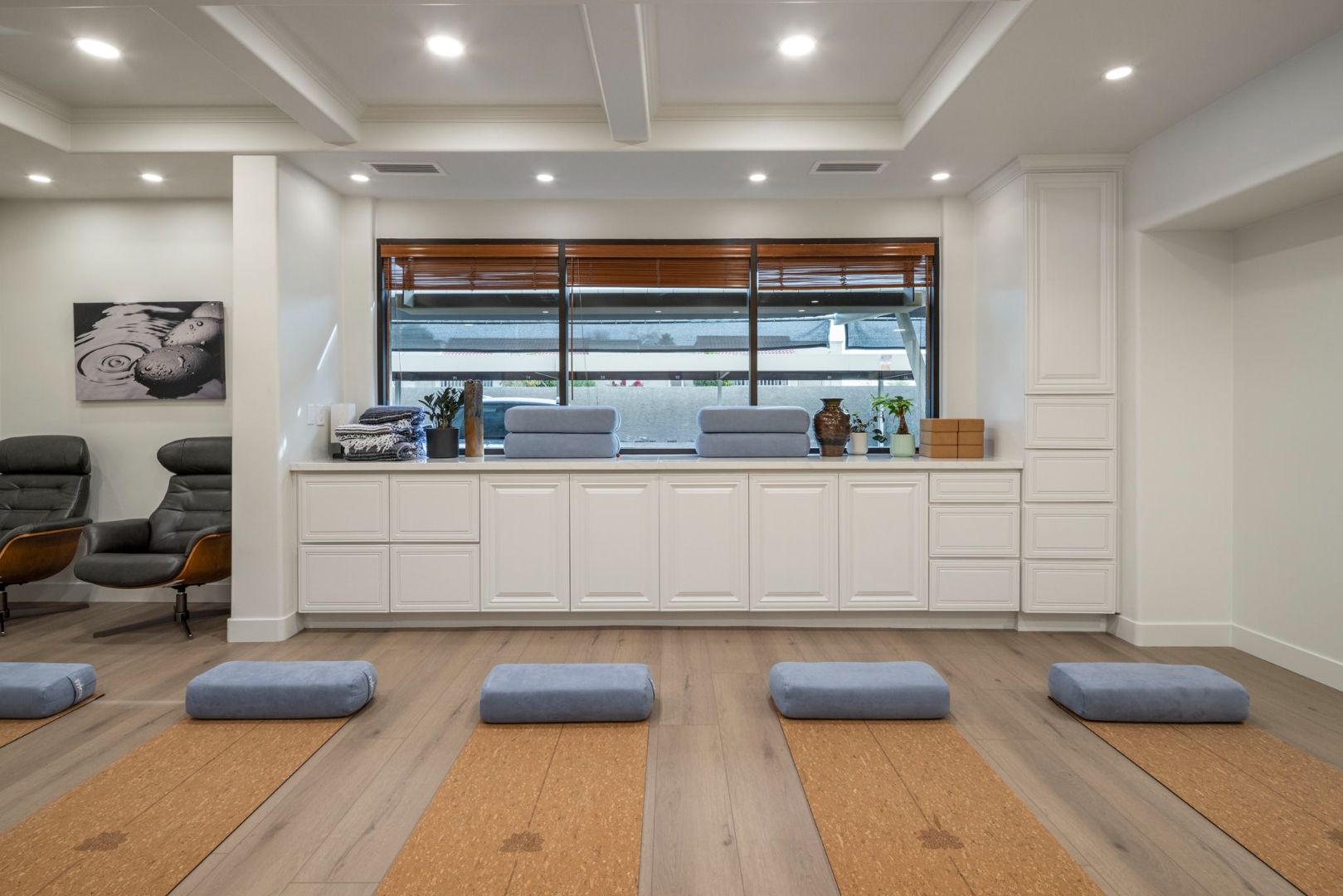
Skills-based therapies cover the practical side: DBT for tolerating intense emotion without acting on it, cognitive behavioral therapy for the thinking that feeds anger, and mindfulness practice for noticing it sooner. When anger is tied to past experience, trauma-focused therapy can run beside them, including EMDR and Deep Brain Reorienting (DBR), which Redefine describes as a bottom-up, body-based approach that works with the physiological sequence of trauma stored in the brainstem. Breathwork and yoga work through the body as well. Care is gender-specific, and women are in their own group.
The most structured of Redefine’s programs: most of the weekday in treatment, with evenings at home. It suits anger that is taking a heavy toll on daily life, when weekly sessions have not given enough structure.
More support than weekly therapy, with the rest of the week left for work and family. Your three days are assigned around clinical needs, therapist recommendations and program availability, and Redefine tries to fit them around your schedule.
Redefine’s most intensive private retreat, for people ready for deeper emotional work on recurring patterns. It is one-on-one and planned around an assessment and a custom itinerary.
A phone conversation about what has been happening and what you have tried.
02
Check your coverage
Verify your insurance online, then admissions reviews your benefits and cost with you by phone.
03
Assessment and plan
A clinician assesses what is driving the anger and builds your plan, with skills work, trauma-focused therapy, neurofeedback and psychiatric care included as they fit.
04
Start
Treatment begins on your program days, PHP or IOP, and you go home each evening.
Tried treatment before? Tell admissions what it was and how it went. It shapes what comes next.
Redefine’s programs draw on the full range of modalities below. For anger, published research supports cognitive behavioral therapy, DBT and mindfulness-based work, and all three are available at Redefine; where anger comes with PTSD, research also supports trauma-focused therapy. Which therapies go into your plan is decided after assessment, not before it.
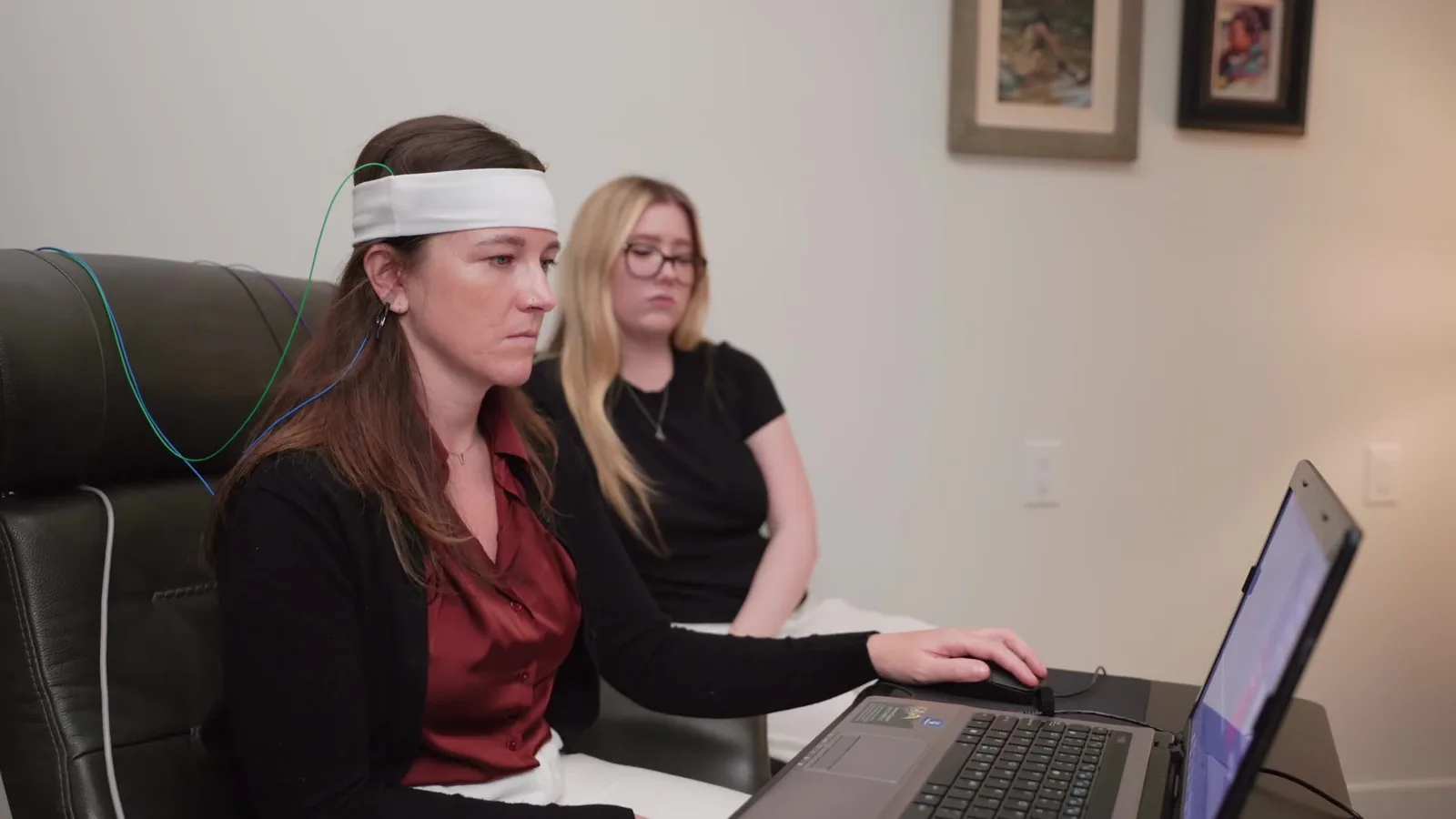
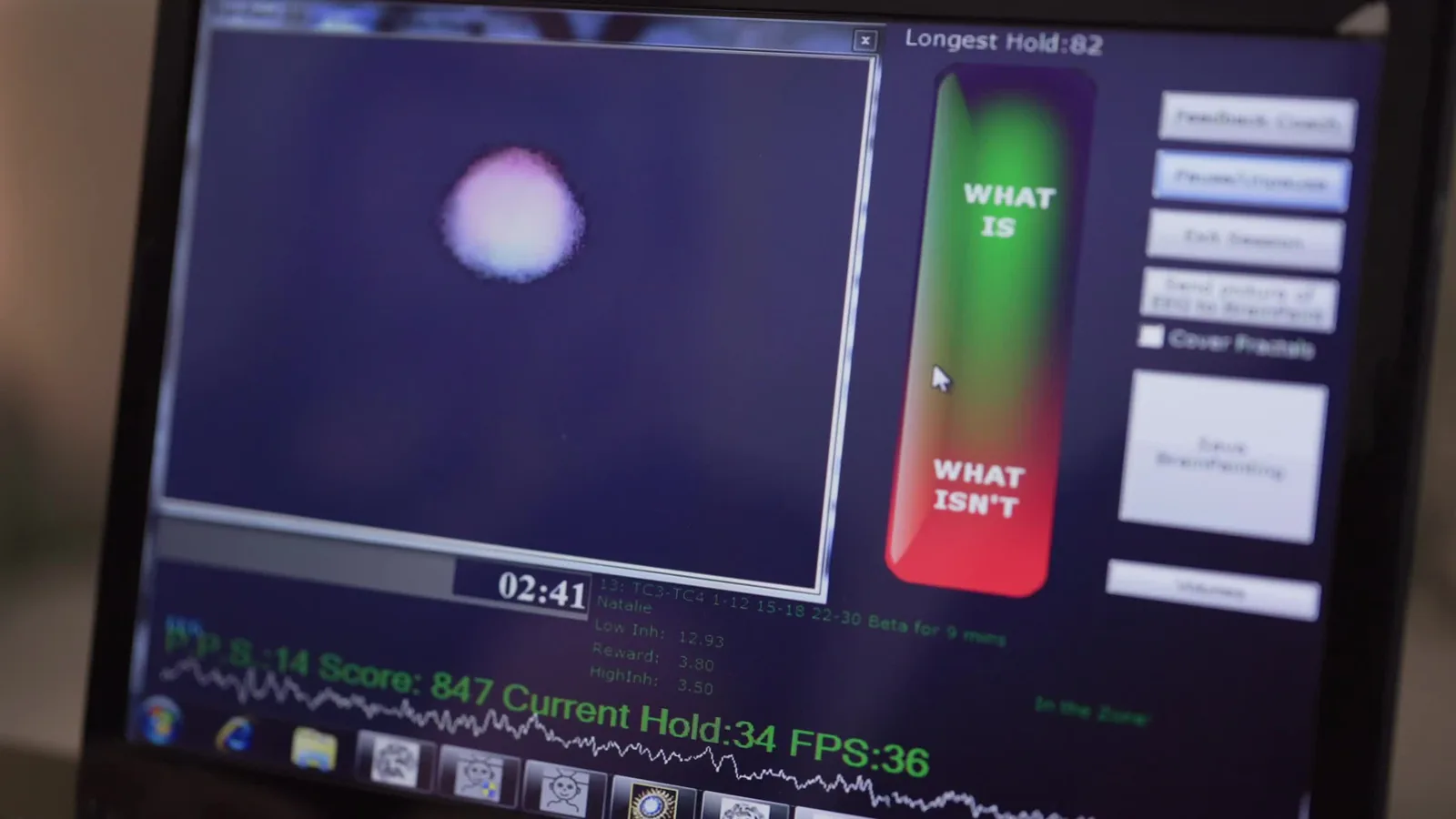
Neurofeedback is built into treatment at Redefine rather than offered as an extra. A client practices with real-time feedback on their own brain activity, so part of the work happens without having to talk through the last argument. How much of it each person has depends on their plan.
More Than 20 Modalities, One Clinical Direction
DBT and cognitive behavioral therapy, trauma-focused therapy, neurofeedback and EXOMIND, PEMF and red light therapy, breathwork, yoga, meditation and Reiki, psychiatry and coaching all sit under one clinical team that keeps track of what each part of the plan is for. So anger tied to an older problem can be worked on in the same plan as that problem, instead of in two different places.
Clinicians Trained for the Work They Deliver
The therapist teaching DBT skills and the therapist doing trauma work are each trained in the approach they lead. When anger has both a skills side and a history behind it, each half gets someone trained for it.
A Private Outpatient Setting
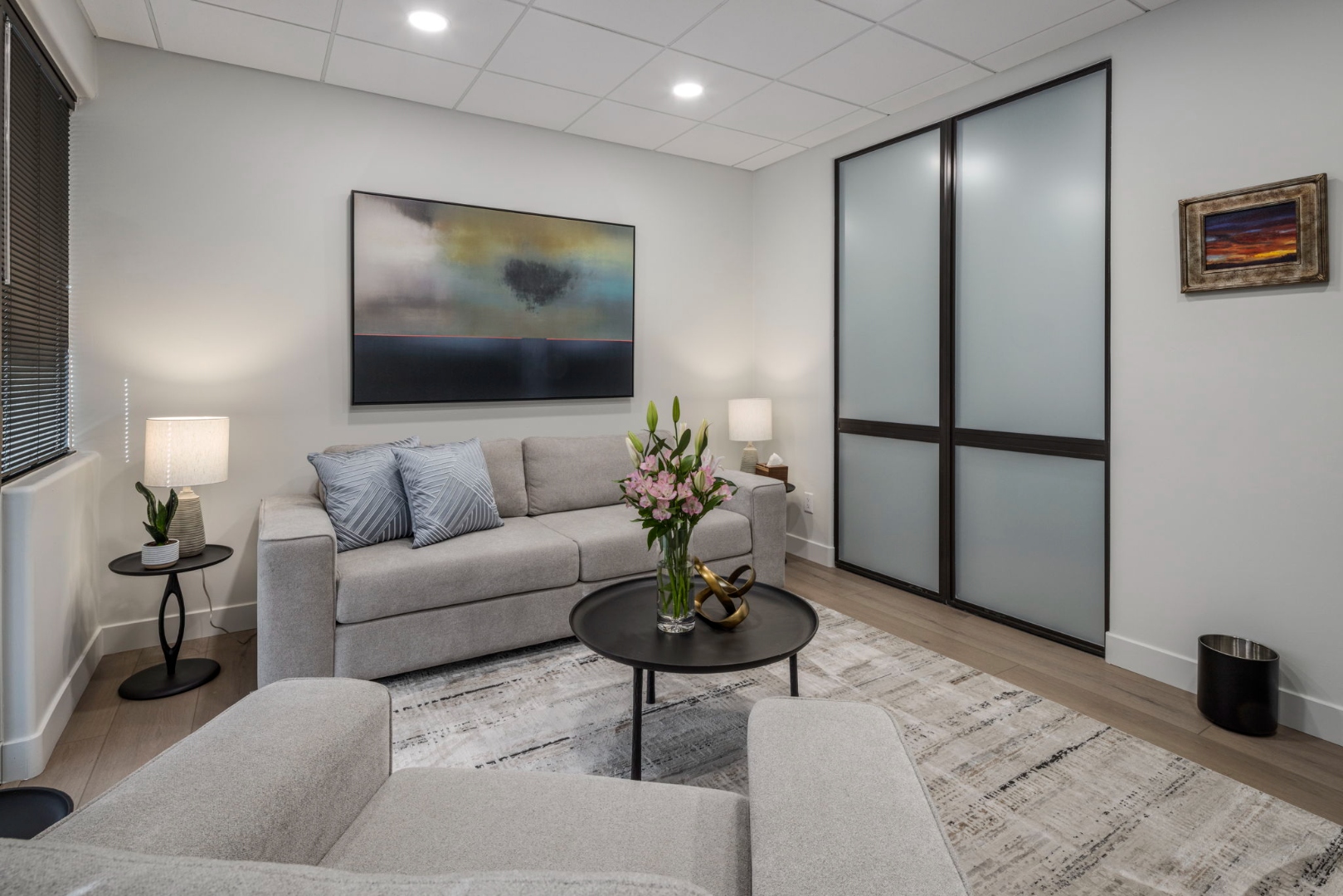
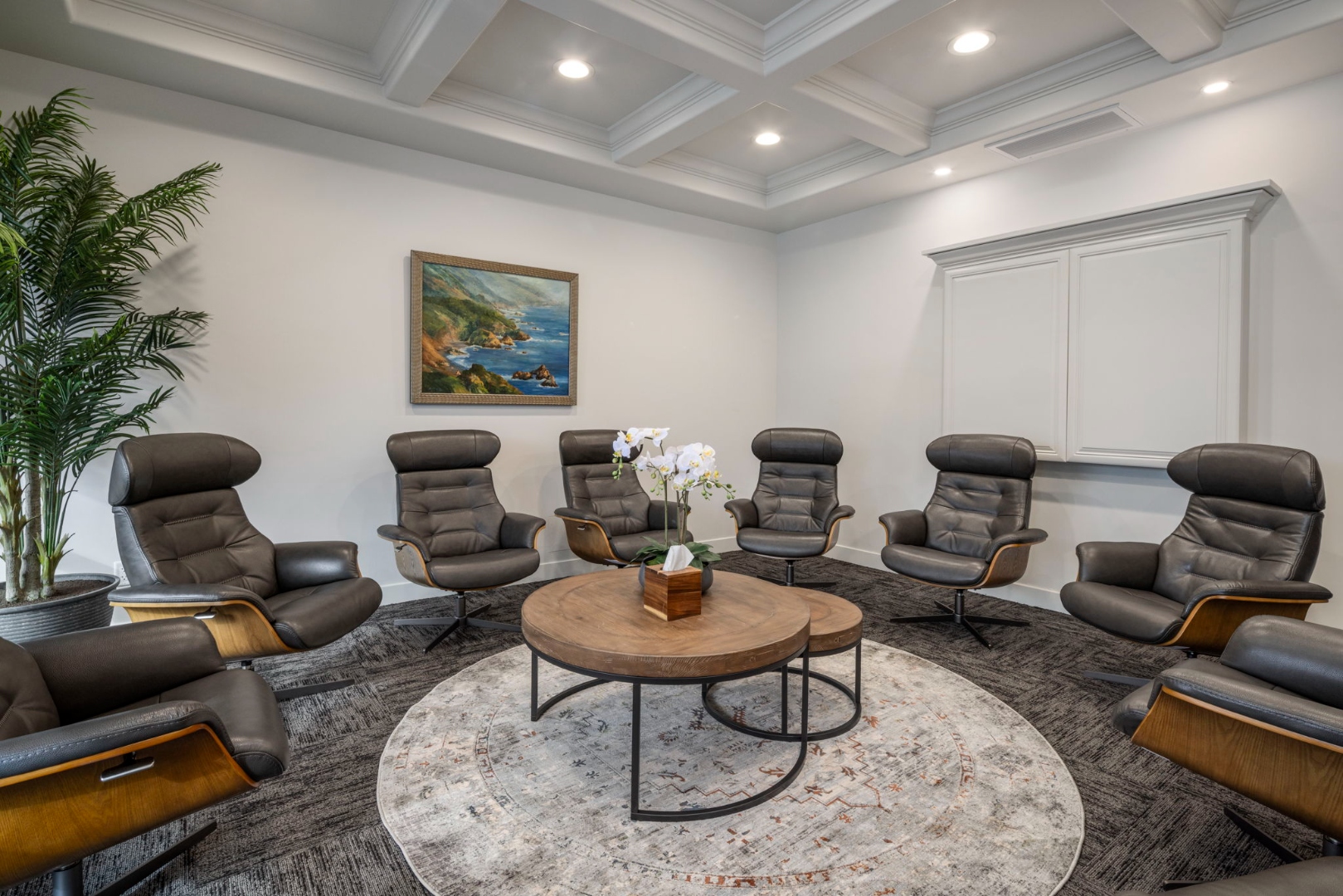
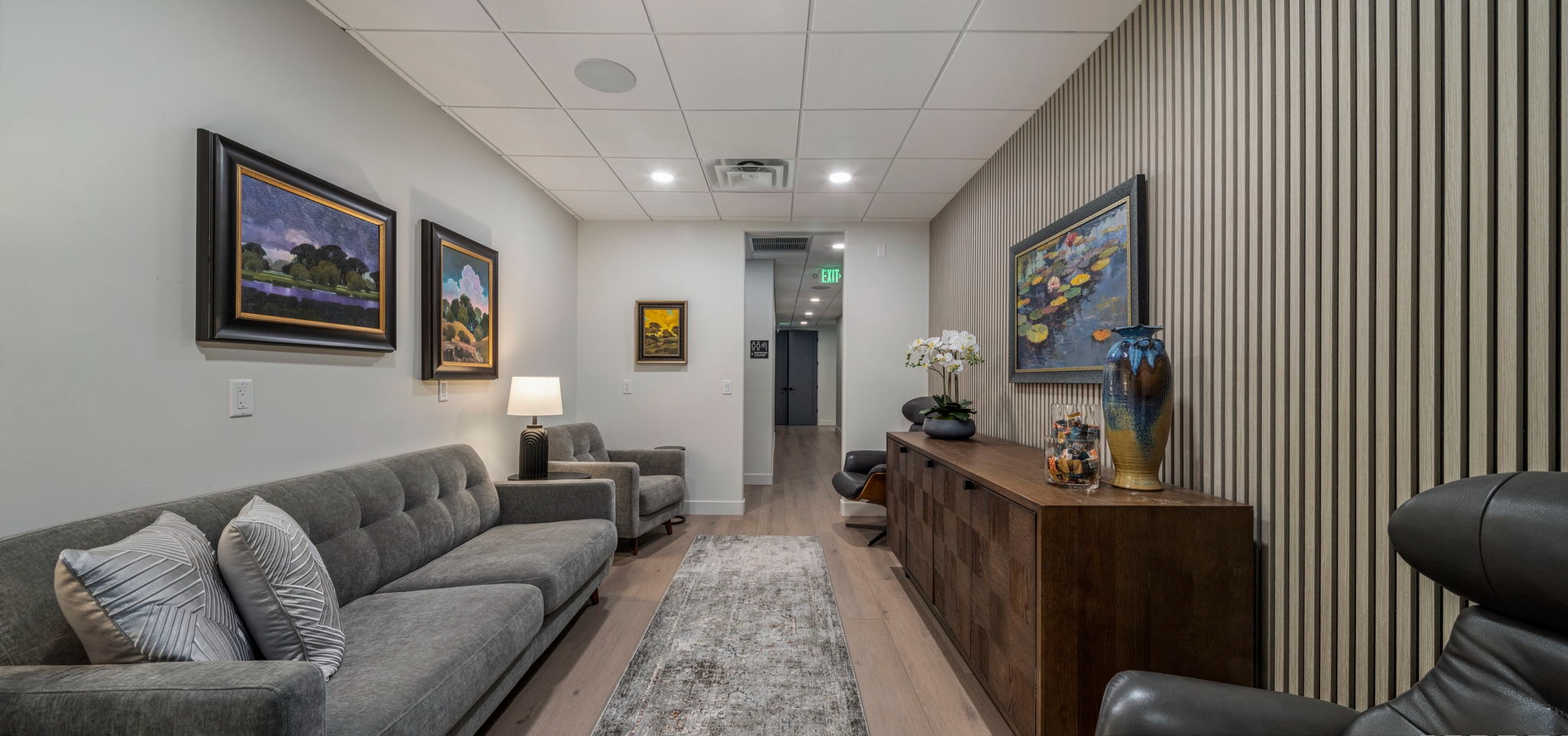
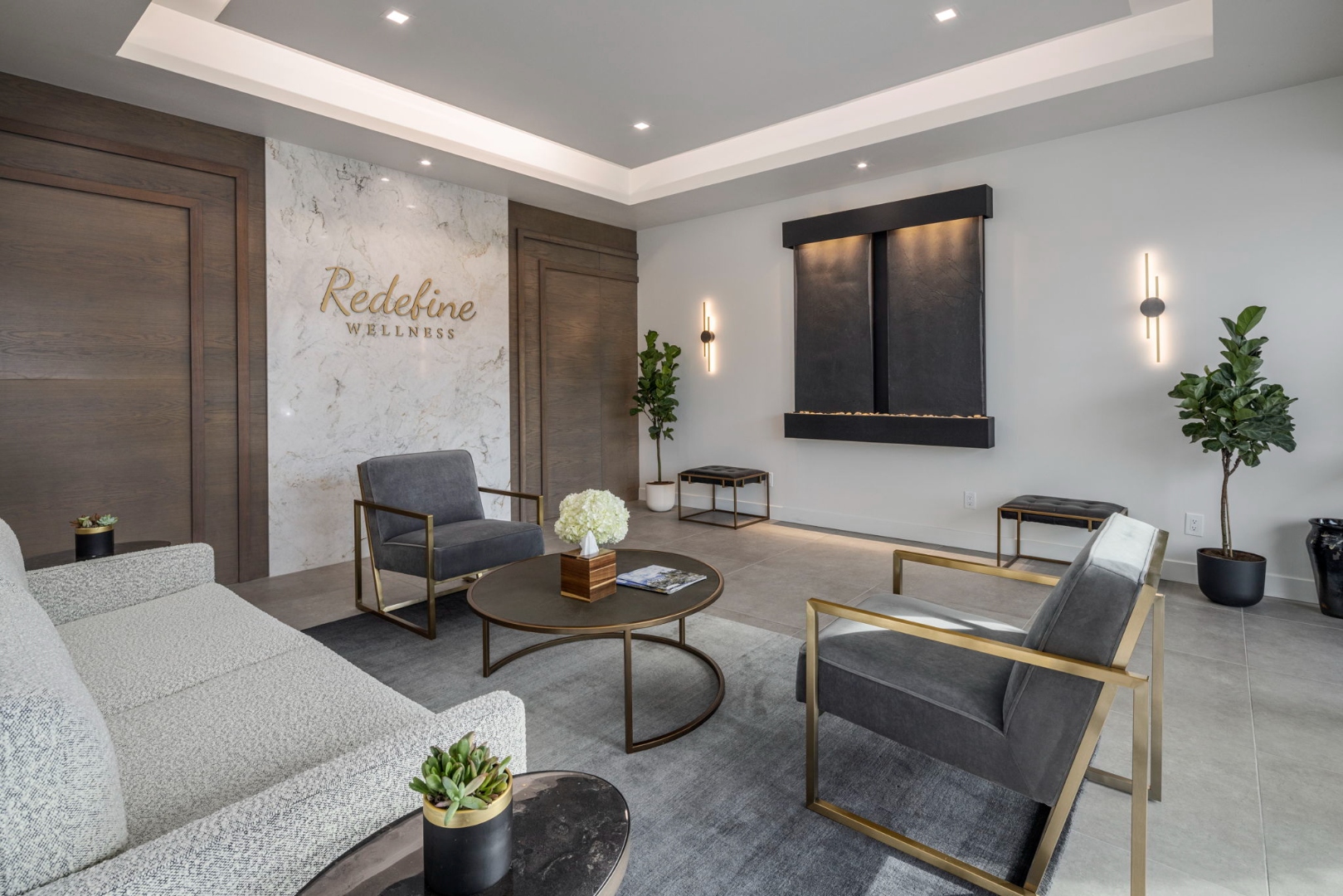
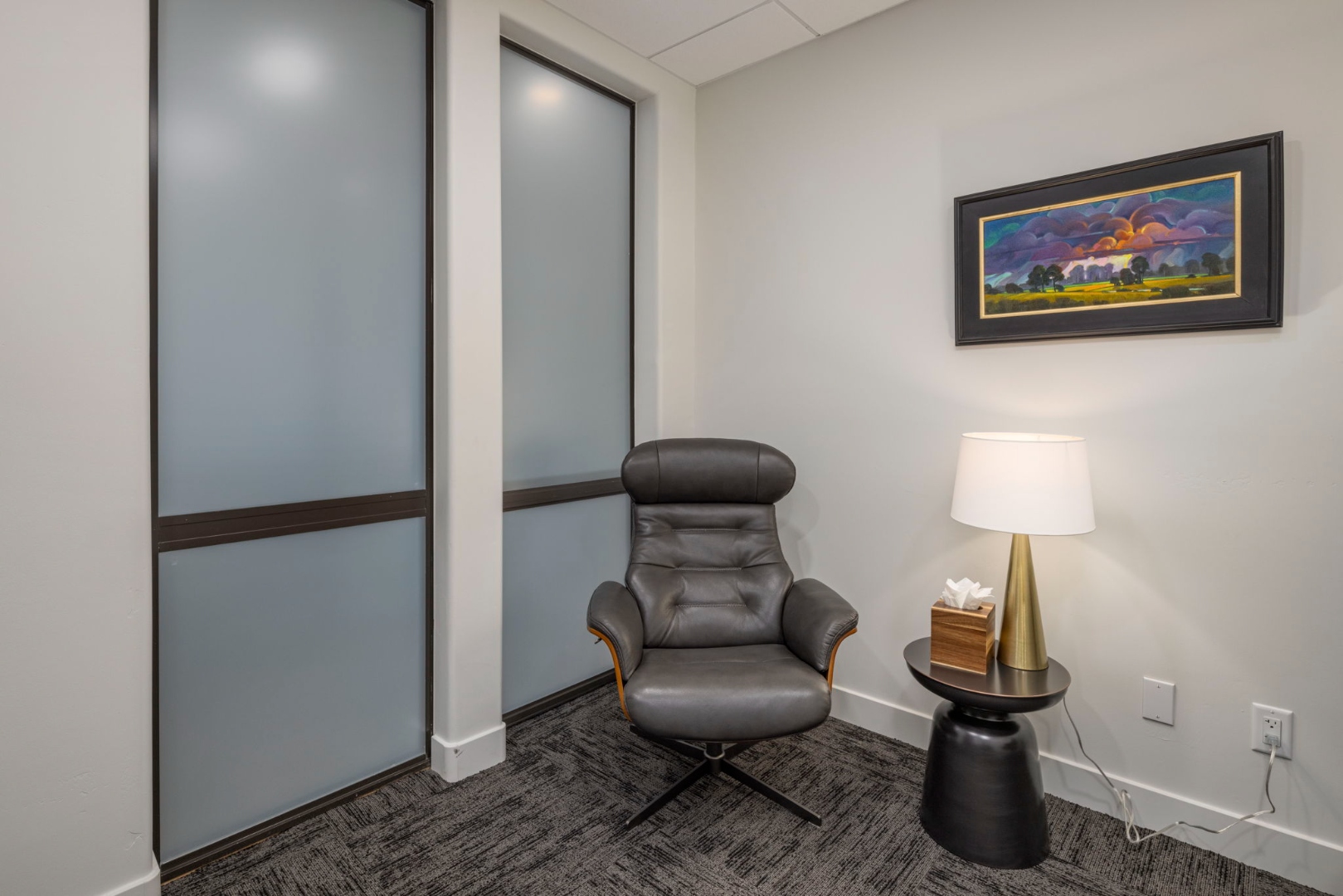
Anger is hard to talk about with other people in earshot. At Redefine the one-on-one work happens in private therapy rooms in a quiet North Scottsdale center, so the hardest conversations stay between you and your therapist.
Accredited by The Joint Commission
The Joint Commission is an independent organization that evaluates health care providers against its standards. Its accreditation is an outside check on the center that you can look at before you call.
Treatment Goals
Treatment Targets That Extend Into Everyday Life
Anger management at Redefine is designed to go past understanding where the anger comes from, toward changes in how a person responds when it rises. Treatment may work with the moment of activation, the skills that follow it and the relationships around it.
Notice anger building in the body earlier, while there is still room to choose what happens next.
Spend less time going back over what made you angry once the moment has passed.
Get through a heated conversation without it turning into words you later regret.
Increase awareness of patterns involving thoughts, emotions, behavior, and physical response.
Develop more effective communication and boundaries.
Say what you need plainly, instead of through sarcasm, silence or an outburst, at home and at work.
Residential Locations for Men and Women in Scottsdale
Redefine partners with Saguaro Recovery to offer residential locations for clients who are traveling for treatment or for those who need additional support. They are places to stay while you attend PHP or IOP, not a residential treatment program. Treatment happens at the outpatient center, and the stay is paid separately.
You attend your program days at the center and return to the house in between.
Desert Rose and Mariposa for women, Cholla and Tortuga for men, all in Scottsdale.
A house manager on site 24 hours a day
Groceries, linens and household supplies included, with community dinners five nights a week
Regular contact between the house and your clinical team
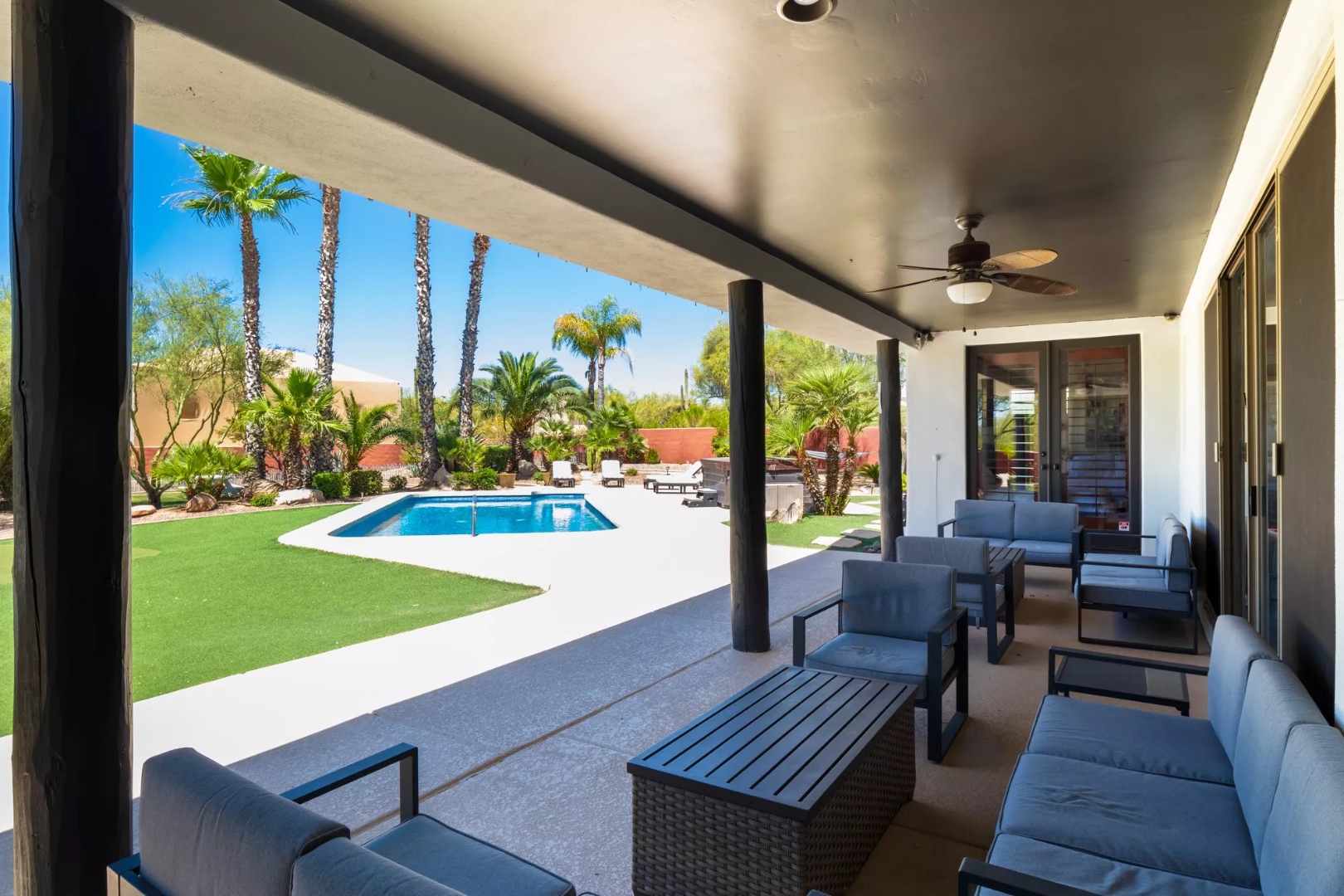
A pool, high-speed internet and desk space for work at each home
Availability varies by house and room, and admissions can walk you through openings and cost.
Testimonials
Healing in Their Own Words
“They made me feel at ease and understood.”
Friendly staff. They made me feel at ease and understood. Thank you all for your help!
Chris S.
“Love this place!!”
Amazing team!! Beautiful and calming environment for healing! Love the red light therapy!! I’m a fan!!
Christine D.
“Best treatment in my LIFE!”
The red light therapy here is the best in my LIFE! Thank you Natalie for your consummate professionalism!
Dan S.
“Laura is an excellent practitioner”
Laura is an excellent practitioner and the facility is beautifully equipped and welcoming ❤️
Dr. Jasmine
“What a blessing to have found and participated in treatment at Redefine Wellness.”
What a blessing to have found and participated in treatment at Redefine Wellness. Excellent, caring staff with next level treatments. Life changing. I highly recommend this wellness center for any and all recovery.
Jen C.
“I have never experienced such a professional and caring staff.”
I have never experienced such a professional and caring staff. You can tell right when you walk in that you are in great hands.
Hunter B.
“The staff is so friendly and the facility is clean. ”
The staff is so friendly and the facility is clean. They are thorough with explanations of the treatment you’ll receive. I would recommend Redefine to all my friends.
Gwen J.
“I love this facility. I have been coming here for several months.”
I love this facility. I have been doing red light therapy here for several months. They have the best bed available. The facility and staff are also top-notch.
I have seen a big improvement in my skin health. I love all the benefits that I get from the treatments. I would recommend Redefine to anyone.
Robert B.
“I was lost, unable to stand up for myself and stuck in anxiety.”
I was lost, unable to stand up for myself and stuck in anxiety. Redefine gave me my power back. I am now able to live without medication for my mental health which I thought was impossible. They are the best people out there. Thank you!!
Presley P.
“The wellness center is stunning and the whole team has been very kind and helpful.”
I’ve been doing therapy at Redefine and I’m obsessed. It’s so relaxing, makes me feel great, and I started seeing results quickly with my skin. The wellness center is stunning and the whole team has been very kind and helpful.
Mackenzie K.
“I’m so happy to say I would 100% recommend this place over and over”
What I was most happy about and sold me on getting therapy myself was how caring everyone is. And it’s not time limited. Like if you need an extra 20 mins cause it was a hard session then they will work with you to get that extra 20 mins. And they didn’t seem rushed to get to the next person. I’m so happy to say I would 100% recommend this place over and over.
briana medley
“The staff here are wonderful and compassionate. I definitely recommend this clinic!”
This clinic has helped a friend of mine through a really difficult and you can actually see a physical chance in her and how she expresses herself. The staff here are wonderful and compassionate. I definitely recommend this clinic!
Beaunerism
“Receiving treatments here was 100% a game changer, I strongly recommend!”
Laura and the team here at Redefine are absolutely amazing. They’ve walked me through relationship coaching, neuro feedback, and connecting more with myself. Receiving treatments here was 100% a game changer, I strongly recommend!
Jae S.
“Highly recommend if you’re looking for something focused and personal.”
I did a 5-day intensive at Redefine and it was exactly what I needed. The space was calm and private, and the sessions were deep but manageable. It gave me time to slow down, reset, and really focus on things I hadn’t had space to deal with. The team was supportive without being pushy — they really respected where I was at. Highly recommend if you’re looking for something focused and personal.
Scott Forbes
“Highly recommend!”
I completed a 4-day intensive here. The personalized approach using different advanced therapy modalities was exactly what I was looking for. Laura and Natalie were wonderful to work with – skilled, compassionate and insightful. The experience has definitely helped me on my healing journey. Highly recommend!
Jenna Wolf
“The entire staff at Redefine is amazing. ”
The entire staff at Redefine is amazing. The support and understanding they show their clients is above anything I’ve ever experienced from a wellness center. Worth the time and energy to put into yourself, the staff made me comfortable doing it.
Brittany Whitley
“The staff is incredible—super friendly”
I can’t say enough great things about Redefine Wellness and Treatment in Scottsdale! The staff is incredible—super friendly, professional, and they really make you feel welcome from the moment you walk in. I’ve been using their red light therapy and PEMF therapy, and both have made a huge difference in how I feel—more energy, better recovery, and overall improved wellness. The space is clean, relaxing, and everything feels thoughtfully done. Highly recommend this place if you’re looking to boost your health and feel your best!
Jon Driscoll
“A beautiful location with wonderful staff”
A beautiful location with wonderful staff. Very professional and the building is extremely clean, with great attention to detail throughout. Top tier equipment met with fantastic service! The mission of wellness and benefitting our lives is inspiring. Thank you for having me!
Matt Sheehan
“They made me feel at ease and understood.”
Friendly staff. They made me feel at ease and understood. Thank you all for your help!
Chris S.
“Love this place!!”
Amazing team!! Beautiful and calming environment for healing! Love the red light therapy!! I’m a fan!!
Christine D.
“Best treatment in my LIFE!”
The red light therapy here is the best in my LIFE! Thank you Natalie for your consummate professionalism!
Dan S.
“Laura is an excellent practitioner”
Laura is an excellent practitioner and the facility is beautifully equipped and welcoming ❤️
Dr. Jasmine
“What a blessing to have found and participated in treatment at Redefine Wellness.”
What a blessing to have found and participated in treatment at Redefine Wellness. Excellent, caring staff with next level treatments. Life changing. I highly recommend this wellness center for any and all recovery.
Jen C.
“I have never experienced such a professional and caring staff.”
I have never experienced such a professional and caring staff. You can tell right when you walk in that you are in great hands.
What type of therapist is best for anger management?
It depends on what is driving the anger. Therapists who work in DBT or cognitive behavioral therapy cover the in-the-moment skills, and when anger is tied to trauma, a trauma-trained therapist matters too. At Redefine they sit on one team with psychiatric care, and the therapists include clinicians trained in DBT and in EMDR.
How long does treatment last?
It depends on the program and on how treatment goes, so there is no set end date at the start. In IOP, participation is reviewed month to month, and the decision to continue, adjust, step down or complete treatment rests on your progress, your goals and what your clinical team recommends. The Deep Dive retreat works differently, as a planned block of days rather than an ongoing program.
Does insurance cover anger management therapy?
That depends on your plan, so the quickest way to find out is to verify your insurance online. Admissions then goes through your benefits and what treatment would cost with you by phone, before anything starts.
What can I do if someone I love has anger problems?
You can call admissions yourself to learn how the programs work and what starting involves, so you have something concrete to offer. The decision to begin, and the assessment, stay with the person you are worried about.
You’ll find Redefine in North Scottsdale, close to the 101 and the Scottsdale Airpark. It is within easy reach of Paradise Valley, Cave Creek and Fountain Hills, and of the wider Phoenix metro.