
If you're comparing treatment programs for anxiety, depression, trauma, burnout or substance use, you've probably seen the word "holistic" on almost every one of them, and it's fair to wonder whether it means real treatment or something soft. In serious care, it means therapy plus practices that work through the body and the stress response, added to the therapy rather than offered in its place.
That one distinction is the quickest way to tell a serious program from a vague one, and it holds whether a program is offering mindfulness groups, neurofeedback or Reiki.
Holistic Means Alongside Therapy, Not Instead of It
NCCIH, the federal research center for complementary health, uses three terms that settle most of the confusion. A non-mainstream practice used together with conventional care is complementary. One used in place of conventional care is alternative. And integrative care brings conventional and complementary approaches together in a coordinated way. Holistic mental health care belongs in the first and third groups. A program that offers it as the second, as a replacement for therapy or medication, is offering something different.
"The whole person" can sound vague, so here is what it covers in mental health and addiction care: thoughts and emotions, the body's stress response, sleep, attention, relationships, substance use, and how work and daily life are going. Talk therapy reaches most of that through conversation and practiced skills. Body-based practices reach it through breath, movement, attention and physical sensation. A plan uses both because distress tends to show up in both: a racing mind and tight shoulders, a hard memory and a startle response, a craving and the restlessness under it.
This gives you a practical test for everything that follows. In serious care, the therapy is not optional, and each added practice is chosen for you rather than handed out as a menu. Medication and psychiatric care stay in place, and any change to them goes through the person who prescribes them.
What a Session Actually Feels Like
What most people want to know first is basic: what you'll be doing, what you'll feel and how long it lasts. Sessions vary by setting and practitioner, but this is what each one typically involves.
Mindfulness and meditation
You sit in a chair or lie on a mat, eyes closed or resting on a spot on the floor, while a guide talks you through paying attention to your breath, sounds or sensations in your body. Your mind will wander, often quickly. The practice is noticing that it has and bringing your attention back, without scolding yourself. A session can run 10 minutes or 45. Structured programs such as mindfulness-based cognitive therapy meet weekly for eight weeks, with short practices at home in between.
Yoga
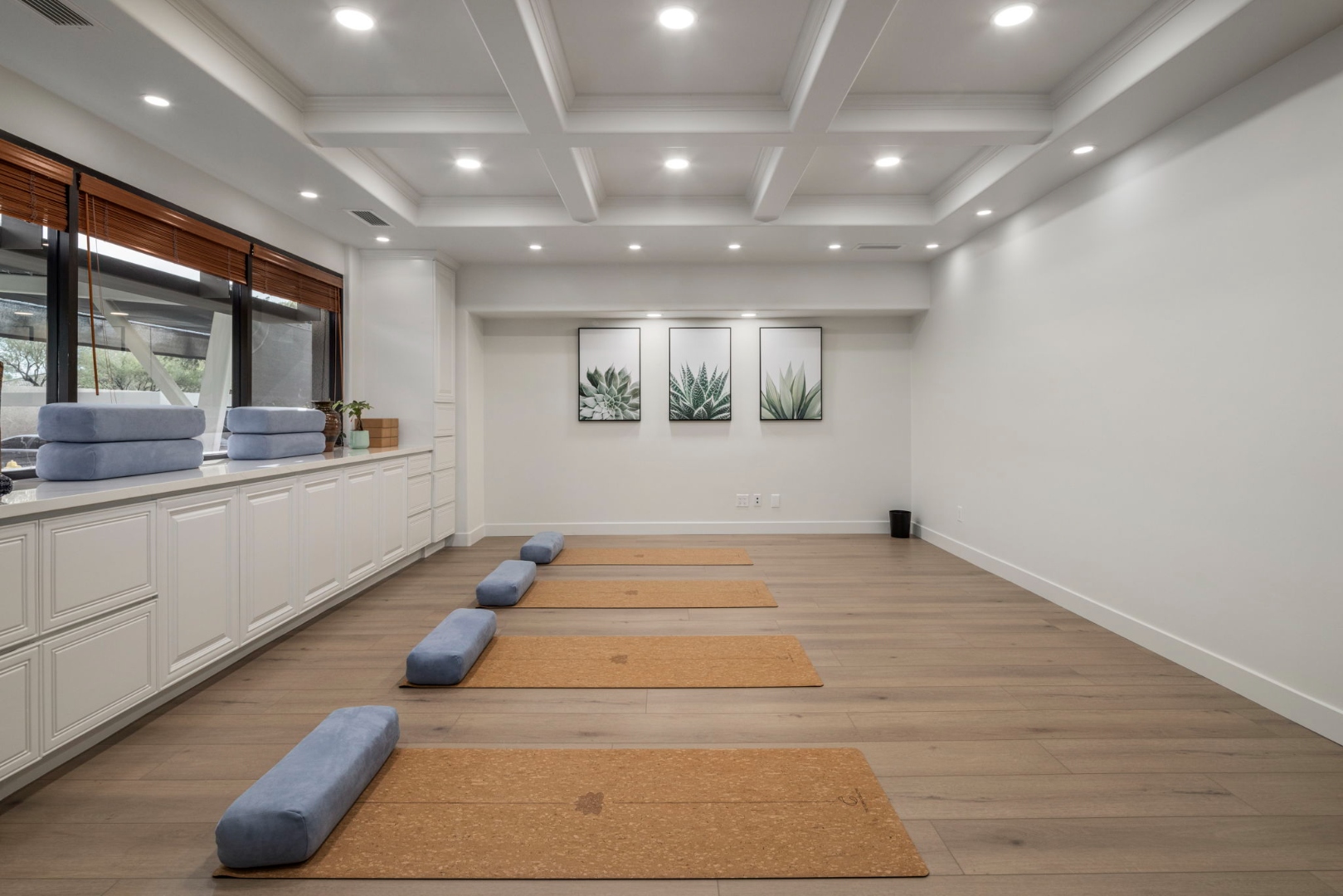
Clinical yoga looks nothing like a crowded power class. You move slowly through supported postures on a mat, pacing your breath with each movement, and nothing asks you to be flexible or fit. Yin yoga holds each posture longer, often several minutes, with cushions and blocks taking your weight. The point is to notice what your body does under mild stretch and slow breathing, and to practice staying with it.
Breathwork
Most clinical breathwork means slowing your breathing and making the exhale longer than the inhale, sometimes with a count to follow, sitting up or lying down. It can be a few minutes at the start of a group or a longer guided session. Some popular styles use fast breathing or long breath holds, which can leave you lightheaded and aren't right for everyone, so it's reasonable to ask which kind a program uses. If you'd like to feel the basic version first, here are some simple breathing exercises you can try today.
Neurofeedback
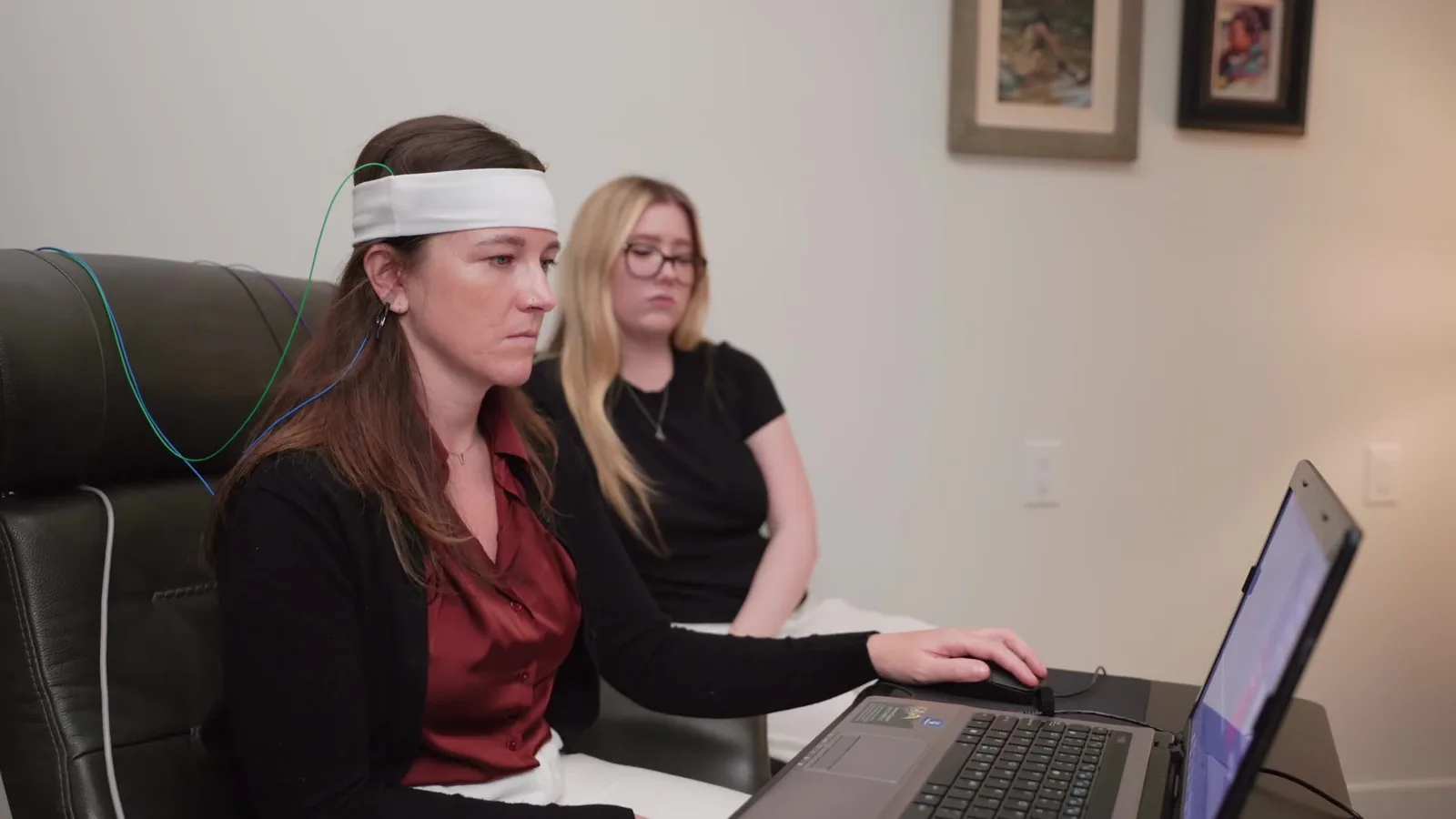
A technician places small sensors on your scalp. There are no needles, and nothing is sent into your brain: the sensors only read your brainwave activity. You sit back and watch a screen or listen to sound that changes as your brain activity shifts toward the pattern the session is training, and that feedback is the training. It can feel quiet, even a little dull, and that's normal. At Redefine, neurofeedback is an integral part of treatment, and how much of it each client receives varies. It is separate from qEEG brain mapping, an assessment available on request. You can read more about how neurofeedback works at Redefine.
PEMF and red light therapy
Both are device-based and passive. For PEMF (pulsed electromagnetic field therapy), you lie or sit on a mat or pad that gives off a pulsing magnetic field; for red light therapy, you sit or lie in front of a panel of red and near-infrared light. Most people feel very little: red light can feel slightly warm, and PEMF may bring a faint tapping or tingling, or nothing at all. Sessions are short. At Redefine, depending on your plan, treatment can include PEMF therapy and red light therapy. For the research in more depth, here is what the PEMF research shows for stress.
Reiki
You lie fully clothed on a treatment table while a practitioner rests their hands lightly on, or just above, different parts of your body, usually in silence, for 30 to 60 minutes. Reiki is based on an idea of energy that science hasn't measured, and it's worth knowing that going in. Many people describe the session as restful. At Redefine, Reiki is delivered by Joe Langheim, the team's Reiki Master.
Turning attention inward doesn't always feel calm. Meditation and body-focused work can bring up anxiety, low mood or old memories for some people: a review of 83 studies found adverse events reported in 8.3 percent of meditation participants overall, most often anxiety and low mood. Keeping your eyes open, shortening the practice, stepping out and telling the guide are all fine. In a treatment program, that reaction is useful information for your therapist.
Where the Research Is Solid, and Where It Is Still Early
The type of comparison matters more than any headline. A practice that does better than a waitlist (people who got nothing yet) may do no better than a sham version, or than another active treatment. That gap is where most holistic claims get oversold, so here is how the main practices stand.
- Most studied, moderate evidence as an add-on. In reviews of trials, mindfulness-based programs reduced anxiety and depression symptoms and performed comparably to cognitive behavioral therapy, though for people with a current diagnosis they did not beat other active treatments. Yoga showed a moderate effect on depression in a large network meta-analysis of exercise, with the researchers rating their confidence low to very low.
- Promising, mostly short-term. Breathwork was linked to small to medium drops in stress, anxiety and low mood across randomized trials, and the authors warned against letting hype outrun the evidence.
- Early. Neurofeedback for PTSD looks positive in small studies, but a 2025 review found the effects came mostly from trials without a sham comparison. Light therapy shows a moderate pooled effect on depressive symptoms with no standard protocol yet, and sham-controlled trials of light to the head were not significant. The main transcranial PEMF study in depression had no control group. And a Cochrane review found too little evidence to say whether Reiki helps anxiety or depression.
Early doesn't mean useless. It means a practice belongs alongside therapy, with modest expectations, and that nobody should promise you a result from it.
Questions That Separate a Serious Program From a Vague One
You don't need to judge the research yourself to judge a program. Ask any program you're considering these five questions, Redefine included, and listen for specifics in the answers:
- Where does licensed therapy sit in my week? A good answer names the therapy (CBT, DBT, EMDR, individual sessions, groups) and how many hours it takes up.
- Who delivers each practice, and what is their training? A good answer names a credential for each one, and tells you when someone is a coach or practitioner rather than a clinician.
- Why would this practice be in my plan, and what would tell us to stop it? A good answer ties it to something you're dealing with and says how it will be checked.
- How does it work with my medication and my prescriber? A good answer keeps your prescriber involved and never suggests stopping medication on your own.
- What does the research show for it? A good answer admits where the evidence is thin.
Be wary of answers built on certainty instead: a cure, a promise to rebuild your brain or permanently fix your nervous system, trauma said to be pulled out of the body, or one package that everyone receives regardless of what they came in with.
How Holistic Care Fits Into a Week at Redefine
Here is how those questions are answered at Redefine Wellness & Treatment. Holistic practices sit inside a structured outpatient program, not beside it. The Partial Hospitalization Program (PHP) runs five days a week, five to six hours a day. The Intensive Outpatient Program (IOP) runs three assigned days a week, four hours a day, 12 hours in all. An IOP day may include process group, CBT or DBT skills, individual therapy, neurofeedback, EMDR or other trauma-focused work, somatic therapy, and breathwork or mindfulness, with medication-management appointments when they're scheduled. Not every client receives every modality each day: the combination depends on your treatment plan, your progress and your therapist's recommendations.
Redefine offers more than 20 modalities, from psychotherapy to neurofeedback to body-based care, and which ones belong in your plan is decided after an assessment, not from a menu. The care is nervous-system-focused: the goal is to help regulate the nervous system, alongside the therapy that works on thoughts, emotions and behavior. If you'd like to see the full set, here are Redefine's holistic therapies.
No. Holistic practices are added to a plan, and they don't stand in for medication that's been prescribed for you. If you hope to reduce or stop a medication, that decision belongs with your prescriber, made gradually and with monitoring. At Redefine, psychiatry and medication management are part of care alongside the holistic practices, and medication-management appointments can fall on a program day.
Not in a clinical setting. Mindfulness and yoga have roots in spiritual traditions, but in treatment they're taught as ways of training attention and noticing the body, and nobody is asked to adopt a belief. Reiki is the one practice here built on an idea of energy that science hasn't measured. You can decline any practice that doesn't sit right with you, and your treatment plan can be built without it.
Most of the research measures change over weeks, not single sessions. Structured mindfulness programs run eight weekly sessions, and breathing practices tend to work better with regular practice than with a one-off try. A single session can leave you calmer for an hour or an evening, and that's worth having, but it isn't the same as lasting change. Nobody can promise how quickly a given practice will help you.
Some practices travel well. Mindfulness, slow breathing and gentle yoga can all be done at home, and short daily practice is how most structured programs are designed. Neurofeedback, PEMF and red light therapy are different: they rely on clinical equipment and trained staff to set and run each session. Home practice is a way to keep skills going between sessions, not a replacement for the care itself.
The most studied example is mindfulness-based relapse prevention, which combines mindfulness practice with relapse-prevention skills. A review of nine trials found small effects on craving and on the consequences of use, with low-quality evidence and no clear difference in relapse. That makes mindfulness a reasonable add-on to substance use treatment rather than a treatment on its own. Redefine treats adults with substance use concerns within its outpatient programs.
It can be, with the right pacing. A trauma-informed guide offers choices rather than instructions: eyes open or closed, sitting rather than lying down, a shorter practice, a posture skipped. You're allowed to stop at any point, and you won't be pushed to stay with a sensation that feels unsafe. If body-focused work brings up a memory, the place to take it is your therapy session, where it can be worked through at a pace you can manage.
You Do Not Need to Know Which Modality You Need
You don't have to arrive with a plan. Tell the admissions team what you're experiencing, what you've already tried and where treatment has fallen short, and they can help you work out whether Redefine's approach fits. Holistic practices are part of treatment depending on your plan, always alongside the clinical program.