Accelerated Resolution Therapy in Scottsdale
At Redefine Wellness & Treatment in Scottsdale, we offer Accelerated Resolution Therapy (A.R.T.) within our PHP and IOP programs. A.R.T. uses directed eye movements and voluntary image replacement to produce rapid symptom relief, often within one to five sessions.
- Joint Commission Accredited
- Daily Neurofeedback
- Root-Cause Treatment
- Body + Brain + Mind Approach
Accelerated Resolution Therapy in Scottsdale, Arizona
Accelerated Resolution Therapy (A.R.T.) at Redefine Wellness & Treatment doesn't happen in isolation. Your sessions are coordinated with neurofeedback, somatic work, and your full clinical team, so the rapid processing A.R.T. produces is stabilized in real time. Developed in 2008 and recognized by APA Division 12 as an evidence-based treatment for PTSD, A.R.T. uses directed eye movements and Voluntary Image Replacement to resolve traumatic memories, phobias, and grief, often within one to five sessions.
-
Rapid Results Without Retelling. A.R.T. doesn't require you to describe your trauma in detail. The technique works through imagery and eye movements, allowing you to process the memory without narrating the experience verbally.
-
Paired With Neurofeedback. A.R.T. can activate the nervous system as distressing images are processed. Neurofeedback helps regulate that activation so processing stays productive rather than overwhelming.
-
Part of a Coordinated Plan. Your A.R.T. sessions connect to your individual therapy, somatic work, and full clinical team. Every session carries forward into your broader treatment. Nothing stays siloed.
A.R.T. is one modality within individualized treatment plans built around your specific needs.
At a Glance

- Treatment Programs
A.R.T. at Every Level of Care
A.R.T. Within PHP
In PHP, A.R.T. sessions happen multiple times per week with the same clinician. Because you're on-site 5 days a week, your therapist can prepare you before each session, monitor how you process between them, and adjust pacing based on what your nervous system needs that day. Neurofeedback and somatic work run alongside A.R.T. to regulate activation as memories get reprocessed. This is the most supported environment for intensive trauma work using A.R.T.

A.R.T. Within IOP
IOP lets you continue A.R.T. while maintaining work and daily responsibilities. Sessions are scheduled within your 3-day treatment week, with enough spacing for processing to settle between appointments. Your A.R.T. clinician coordinates with the rest of your treatment team so that group work, skills training, and somatic sessions all reinforce what's happening in reprocessing. This format works well as a step-down from PHP or for clients whose nervous system is stable enough to process at a less intensive pace.

A.R.T. in Private Retreats
Private retreats compress weeks of A.R.T. work into a concentrated 3-to-7-day immersion. Your entire schedule is built around reprocessing: A.R.T. sessions daily, neurofeedback before and after, somatic regulation throughout, and a dedicated clinician managing pacing and safety. This format is designed for people traveling to Scottsdale specifically for treatment, executives who can't commit to weekly programming, or anyone whose trauma needs focused, uninterrupted clinical attention.

- Treatment Programs
The A.R.T. Process at Redefine
Your Therapist Identifies the Target
You and your therapist select a specific memory, image, or scene that's driving your symptoms. You don't need to describe every detail out loud. The therapist only needs enough context to guide the session.
You Follow Directed Eye Movements
While holding the memory loosely in mind, your therapist guides your eyes in smooth, lateral movements. This activates the brain's natural processing system, similar to what occurs during REM sleep, and begins reducing the emotional charge attached to the memory.
You Replace the Image Voluntarily
This is what makes A.R.T. distinct. Once the distressing image has been processed, your therapist guides you through Voluntary Image Replacement (VIR). You choose a new image to associate with the memory. The factual knowledge of what happened stays intact, but the mental picture that once triggered distress is replaced with something neutral or positive.
The Memory Stays, the Reaction Resolves
You still know what happened. But when you recall the event, the new image surfaces instead of the distressing one. The emotional and physical reactions that used to flood you lose their grip. Most clients report noticeable relief within a single session.
You don't have to retell your story in detail. A.R.T. works with the images stored in your nervous system, not with a verbal play-by-play. Most clients are surprised by how quickly the distress attached to a memory can shift when the image itself is replaced.
- Problems A.R.T. Solves
A.R.T. & The Brain & Nervous System
Conditions A.R.T. Can Help Resolve
- Post-traumatic stress disorder, including single-incident and complex PTSD
- Childhood trauma and adverse childhood experiences (ACEs)
- Grief and complicated loss, including prolonged grief disorder
- Phobias, specific fears, and panic disorder
- Anxiety disorders rooted in past events, including generalized anxiety and health anxiety
- Depression tied to unresolved experiences or negative core beliefs
- Distressing life events such as accidents, medical trauma, divorce, or sudden loss
- Emotional dysregulation linked to attachment trauma or early relational wounds
Signs A.R.T. May Be Right for You
- Intrusive images or mental pictures you can't control, where your brain replays what happened without your permission
- Hypervigilance and a nervous system that won't downshift, even when you're objectively safe
- Body-level panic (racing heart, tight chest, cortisol surges) with no clear present-moment trigger
- Negative core beliefs that feel locked in place: "I'm not safe," "It was my fault," "I'm broken"
- You understand what happened intellectually but your body still reacts as though it's happening now
- Sleep disruption, nightmares, or dread around bedtime that signals unresolved nervous system activation
- Avoidance patterns where you shrink your world to manage triggers instead of processing them
- Talk therapy has helped you understand what happened but hasn't changed how your body reacts to it
- Treatment Plans
How A.R.T. Is Integrated in the Outpatient Schedule
This is a sample PHP week, not a fixed schedule. Your clinical team builds your plan around your specific presentation. Some clients need one A.R.T. session per week; others do two. The number of sessions adjusts as your nervous system responds and as specific images are resolved.
- Treatment Plans
Our A.R.T Therapists
Brenna Gonzales
Licensed Professional Counselor · Somatic Experiencing Practitioner · Certified Multiple Addictions Therapist
Brenna integrates A.R.T. with somatic experiencing to address trauma at both the cognitive and physiological level. Her approach targets distressing images directly, helping clients replace what the nervous system has been holding onto without requiring repeated retelling of the event.
View Full Profile
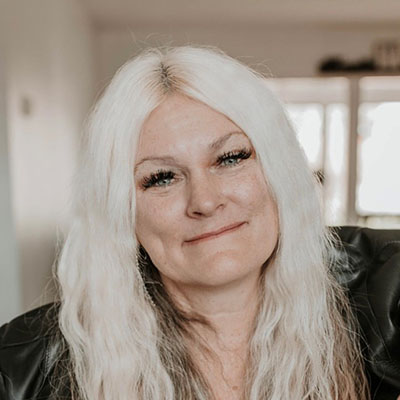
Kim Miller
Licensed Clinical Social Worker · Licensed Independent Substance Abuse Counselor · Somatic Experiencing Practitioner
Kim brings A.R.T. into her work with clients navigating addiction and co-occurring disorders, using it to resolve the distressing images and sensory memories that often drive substance use patterns. Her dual focus on trauma processing and addiction recovery helps clients address what fuels relapse at the source.
View Full Profile1 of 2
Real Connection, Support, & Healing
Our Scottsdale outpatient programs combine innovative neuroscience with proven therapeutic approaches.
More Therapies, Better Outcomes
A.R.T. is one modality within a treatment plan built from over 20 clinical and holistic approaches. At Redefine, your clinical team selects the combination that fits your specific presentation, not a preset checklist. Many clients pair A.R.T. with neurofeedback to stabilize the nervous system before and after image replacement sessions, while somatic work helps process what the body is still holding independently of the visual memory.
Every modality listed here can work alongside A.R.T. within your individualized treatment plan.
Browse More Modalities
Brain-Based
Psychotherapy
Body & Nervous System
Trauma Processing
Holistic & Wellness
Clinical Support

- Testimonials
Healing in Their Own Words
“They made me feel at ease and understood.”
Chris S.
“Love this place!!”
Christine D.
“Best treatment in my LIFE!”

Dan S.
“Laura is an excellent practitioner”

Dr. Jasmine
“What a blessing to have found and participated in treatment at Redefine Wellness.”
Jen C.
“I have never experienced such a professional and caring staff.”
Hunter B.
“The staff is so friendly and the facility is clean. ”

Gwen J.
“I love this facility. I have been coming here for several months.”

Robert B.
“I was lost, unable to stand up for myself and stuck in anxiety.”

Presley P.
“The wellness center is stunning and the whole team has been very kind and helpful.”

Mackenzie K.
“I’m so happy to say I would 100% recommend this place over and over”

briana medley
“The staff here are wonderful and compassionate. I definitely recommend this clinic!”
Beaunerism
“Receiving treatments here was 100% a game changer, I strongly recommend!”
Jae S.
“Highly recommend if you’re looking for something focused and personal.”
Scott Forbes
“Highly recommend!”
Jenna Wolf
“The entire staff at Redefine is amazing. ”

Brittany Whitley
“The staff is incredible—super friendly”

Jon Driscoll
“A beautiful location with wonderful staff”
Matt Sheehan
“They made me feel at ease and understood.”
Chris S.
“Love this place!!”
Christine D.
“Best treatment in my LIFE!”

Dan S.
“Laura is an excellent practitioner”

Dr. Jasmine
“What a blessing to have found and participated in treatment at Redefine Wellness.”
Jen C.
“I have never experienced such a professional and caring staff.”
Hunter B.
- Research
The Research on A.R.T.'s Effectiveness in Treatment
What the Latest Research Shows
- Updated 2026In the first randomized controlled trial of A.R.T., 57 service members with combat-related PTSD showed significant reductions in PTSD, depression, anxiety, and trauma-related guilt. Most completed treatment in 3 to 4 sessions.
A.R.T. produced significant PTSD symptom reduction even in veterans where previous treatments had failed. Completers showed large effect sizes, and 72% finished the full course, a high retention rate for trauma therapy.
In the first RCT of A.R.T. for grief, 54 older adults with complicated grief showed meaningful improvement in grief severity, PTSD symptoms, and depression after A.R.T. sessions. This expanded A.R.T. research beyond military PTSD populations.
A.R.T. significantly reduced PTSD symptoms in both civilians and military participants, with civilians showing an even stronger treatment response. This confirmed A.R.T. is effective well beyond military populations.
A comprehensive review of all published A.R.T. research found it to be an effective, efficient, and versatile psychotherapy. Outcomes across 254 participants showed rapid symptom resolution, typically within 1 to 5 sessions.
- Giving You The Answers You Need
Frequently Asked Questions
What Happens During an A.R.T. Session?
How Is A.R.T. Different From EMDR?
Do I Have to Talk About What Happened?
How Many Sessions Will I Need?
Is A.R.T. Evidence-Based?
Does Insurance Cover A.R.T.?
Our Mission
At Redefine Wellness and Treatment, we empower healing by uniting mind, body, and spirit. Using trauma-informed therapies, neuroscience, and holistic practices, we deliver personalized care that fosters resilience, growth, and lasting transformation.
Our Vision
We aspire to create a world where access to transformative healing is available to all, empowering people to lead fulfilling, balanced lives.
Recognized by
- Blog
Helpful Resources for You
8245 N 85th Way
Scottsdale, AZ 85258