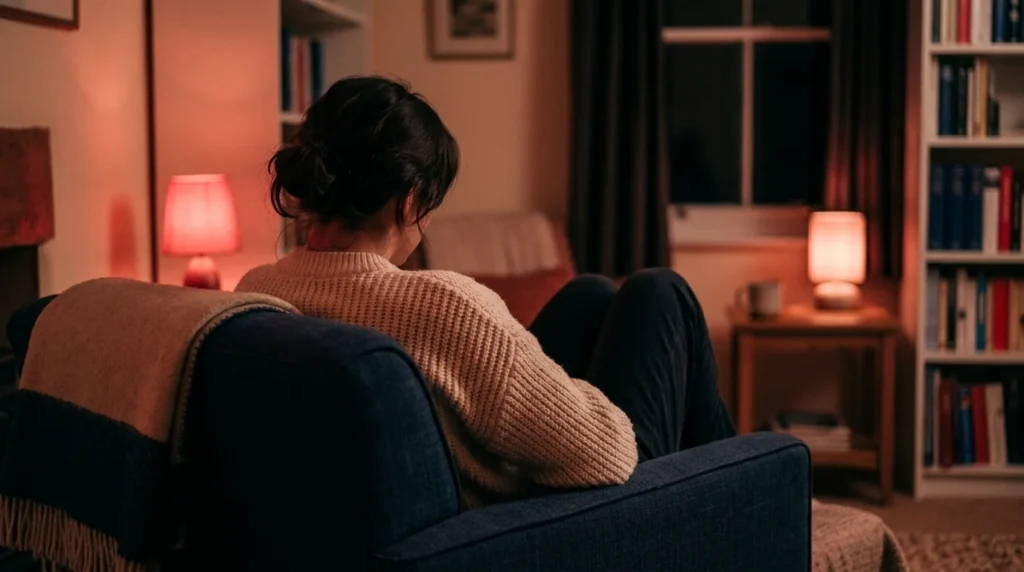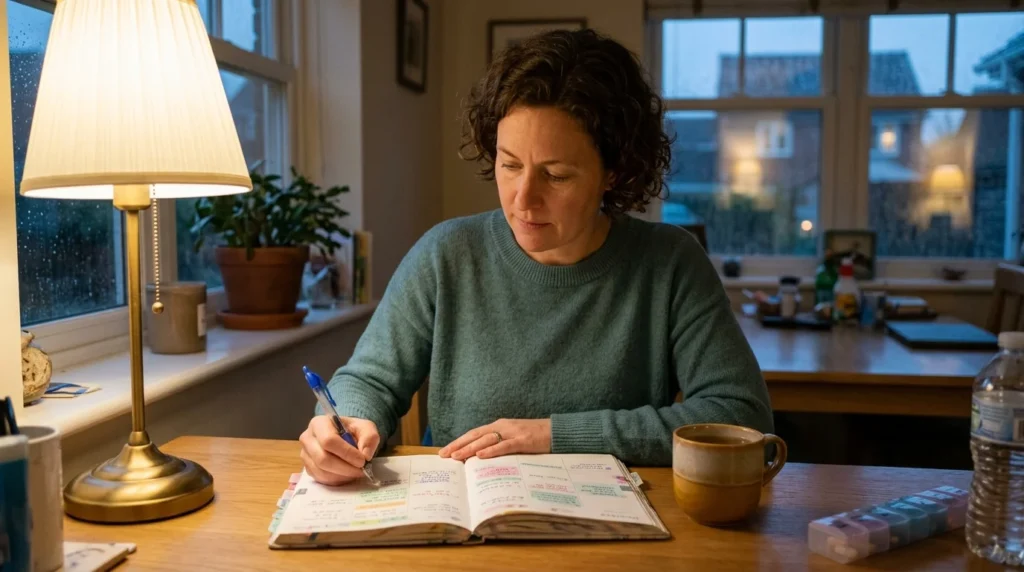
Red light therapy has become a popular talking point in mental health and wellness, usually with a big promise attached: better sleep, steadier mood, a calmer mind. The honest answer is more measured. Red light therapy is an emerging, supportive tool, and the research on mood and sleep is still early and mixed.
This guide explains what red light therapy actually is, how light connects to mood and sleep, what the current evidence shows, and where it fits alongside professional care. The goal is to help you read past the marketing so you can make an informed decision about your own mental health.
People use "red light" to mean three separate things: red light therapy devices that shine red or near-infrared light on the body, the warm dim light you keep on in the evening, and bright light therapy boxes used for seasonal depression. They work differently and have different evidence. This guide keeps them separate, because blurring them is where most of the confusion starts.
Why Light, Mood, and Sleep Are Connected
Light is the main signal your body uses to keep time. Morning light helps set your internal clock, and dim light in the evening lets your brain wind down. When that light schedule is disrupted, by shift work, long dark winters, or late nights on a bright screen, sleep and mood often suffer together. That is the real link behind the interest in red light, and it is also why any single device is only part of the picture.
How Common Sleep and Mood Problems Are
The need is widespread. More than one in five U.S. adults, about 23 percent, live with a mental illness in a given year, according to the National Institute of Mental Health. Sleep and mood tend to move together: poor sleep can deepen low mood, and low mood can wreck sleep. Seasonal patterns matter too, and an estimated 5 percent of U.S. adults experience seasonal affective disorder, a form of depression tied to shorter daylight hours, per the American Psychiatric Association.
Who This Affects Most
People who work overnight shifts, travel across time zones, or spend little time in daylight are most exposed to circadian disruption. So are people already managing depression or anxiety, since sleep problems and mood symptoms feed each other. For these readers, managing light is a reasonable, low-risk habit to explore, but it is a support, not a treatment on its own.
What Red Light Therapy Actually Is (and Is Not)
Red light therapy, also called photobiomodulation, uses red and near-infrared light, usually in the range of about 600 to 1,000 nanometers, delivered by a panel or handheld device. The light is absorbed by parts of your cells and is being studied for effects on tissue and, more recently, the brain. It is not the same as the warm lamp you leave on at night, and it is not the same as the bright light boxes used for seasonal depression.
Photobiomodulation and Near-Infrared Light
In photobiomodulation, specific wavelengths are absorbed by mitochondria, the energy centers inside your cells. Researchers are studying whether this can influence inflammation, circulation, and cell activity. When the light is aimed at the forehead to reach the brain, it is called transcranial photobiomodulation, and that is the version now being tested for mood. This is an active area of research, not settled science.
Red Light Therapy vs. Ambient Evening Light
Keeping lights warm and dim in the evening is a different idea entirely. Red-toned light suppresses the sleep hormone melatonin less than bright blue-white light does, which is why warm bulbs are gentler at night. Even so, all light suppresses melatonin, and the brighter the source, the more it suppresses, including red, according to the University of Alabama at Birmingham. More light before bed is not better.
Red Light Therapy vs. Bright Light Therapy for Depression
Bright light therapy is the most established light treatment for mood. It uses a bright white light box in the morning and has research support for seasonal affective disorder and, increasingly, non-seasonal depression, as the wider field of holistic therapy approaches continues to be studied. Bright light therapy is not the same as a red light therapy panel, and the two should not be treated as interchangeable.
What the Evidence Says About Mood and Sleep
Here is where honesty matters most. The marketing around red light runs well ahead of the science. Some early studies are encouraging, others are cautionary, and the strongest current takeaway is that timing, intensity, and the specific method all matter.
Red Light and Sleep
Bright red light right before bed is not automatically good for sleep. In a single-blind randomized controlled trial of 114 people, one hour of red light before bed shortened the time it took to fall asleep but also reduced total sleep time and sleep efficiency and raised negative-emotion scores in healthy sleepers, published in a study on the effects of red light on sleep and mood. All light suppresses melatonin, and brighter light suppresses more, including red. For sleep, more light is not better.
Red Light and Mood or Depression
Transcranial photobiomodulation, red or near-infrared light aimed at the forehead, is being tested for depression, but it is still under study. A 2024 randomized, double-blind, sham-controlled trial evaluated wearable, self-administered transcranial photobiomodulation for major depressive disorder and sleep, reported in the Journal of Affective Disorders. Early trials like this are promising, but they are research settings with medical oversight, not a basis for self-treatment at home.
Where the Evidence Is Still Thin
Devices vary widely in wavelength, dose, and quality, and studies use different protocols, which makes results hard to compare. There is no agreed dosing for mood or sleep, and long-term data is limited. That is why a careful program treats red light as a supportive add-on and keeps the focus on approaches with stronger evidence.
How Red Light Therapy Fits Into Mental Health Care
Used sensibly, red light can be a small supportive piece of a larger plan. It works best as one option among many, chosen with a clinician who knows your history, rather than as a device you rely on to fix mood or sleep on its own.
A Supportive Tool, Not a Standalone Treatment
Red light therapy is a supportive practice, not a proven treatment for depression, anxiety, or insomnia. It does not replace therapy, medication, or medical care. If you take medication for a mental health condition, keep taking it as prescribed and make changes only with your prescriber. Supportive practices can aid relaxation, but they do not treat a condition by themselves.
How Redefine Uses Modalities Together
Redefine Wellness offers red light therapy as one of more than 20 wellness modalities, used alongside clinical care rather than in place of it. For nervous-system regulation and sleep, the team more often leans on approaches with a deeper research base, such as neurofeedback and PEMF therapy. You can see the full menu of holistic therapies and how each is matched to the individual.
Common Myths About Red Light Therapy for Mood and Sleep
A few claims get repeated so often they start to sound like fact. Here are three worth correcting.
Myth: Red Light Therapy Cures Depression or Insomnia
Reality: it does not. Red light therapy is a supportive practice being studied, not a cure for any mental health or sleep condition. Depression and insomnia are best addressed with evidence-based care from a licensed clinician, and any supportive tool works alongside that, not instead of it.
Myth: Any Red Light Before Bed Improves Sleep
Reality: not necessarily. In a controlled trial, bright red light for an hour before bed reduced total sleep time and sleep efficiency in healthy sleepers. All light suppresses melatonin, so intensity and timing matter more than the color of the bulb.
Myth: Red Light Therapy Works Instantly
Reality: there is no reliable evidence of an instant effect. Research protocols use repeated sessions over weeks, and results are mixed even then. If a product promises a quick fix for mood or sleep, treat that as a marketing claim, not a clinical one. Individual results vary.
When to Talk to a Professional
Adjusting your evening light and morning daylight can help with everyday sleep and mood. When symptoms start to interfere with daily life, professional support makes the difference.
Signs It Is Time to Seek Support
Consider talking with a licensed clinician if low mood, anxiety, or poor sleep lasts more than two weeks, disrupts your work or relationships, or pulls you away from things you care about. Care delivered inside an accredited program can coordinate several approaches at once, such as outpatient depression treatment or an Intensive Outpatient Program.
What to Expect When You Reach Out
A licensed clinician reviews your history, your sleep, and your goals, then suggests a plan and adjusts it over time. The plan is built with you, and supportive tools are added only where they make sense. You do not have to sort out which options fit on your own.
If you are in crisis or thinking about harming yourself, do not wait. Call or text 988, the Suicide and Crisis Lifeline, or call 911. If you take medication for a mental health condition, keep taking it as prescribed; any change should be made with your prescriber, never on your own.
The evidence is limited and mixed. Warm, dim light in the evening suppresses melatonin less than bright blue-white light, which can support sleep. But a controlled trial found bright red light for an hour before bed reduced sleep efficiency in healthy sleepers. Timing and intensity matter more than color.
It is being studied but not proven. Transcranial photobiomodulation, light aimed at the forehead, is in early clinical trials for depression. Those are supervised research settings, not a basis for self-treatment. Red light therapy is a supportive tool, not a replacement for therapy, medication, or professional care. Individual results vary.
No. Bright light therapy uses a bright white light box in the morning and has the strongest research support for seasonal depression. Red light therapy uses red or near-infrared light from a device and is a separate, less established tool. They are not interchangeable, and they should not be treated as the same thing.
General guidance is to keep evening light warm and dim, and to avoid bright light close to bedtime. Because all light suppresses melatonin, brighter exposure near bed can work against sleep. If you are considering a device, ask a qualified provider about timing and eye safety first.
Small amounts of red light are generally considered safe, but bright light near bedtime can disrupt sleep, and eye safety is a real concern with devices. Talk with a qualified provider before starting, especially if you have an eye condition or take medication. This is general information, not medical advice.
Yes. Redefine Wellness offers red light therapy as one of more than 20 wellness modalities at its Scottsdale center, used alongside clinical care rather than on its own. A licensed clinician helps decide whether it fits your plan. Redefine is an out-of-network provider, so coverage depends on your specific benefits.