Neurofeedback turns up on a lot of addiction treatment pages, usually described as brain training that quiets cravings and makes recovery stick. If you or someone close to you is weighing treatment for alcohol or drug use, it is fair to ask whether that description holds up. The studies have a real answer, and it is more modest than the marketing.
What a Session Involves
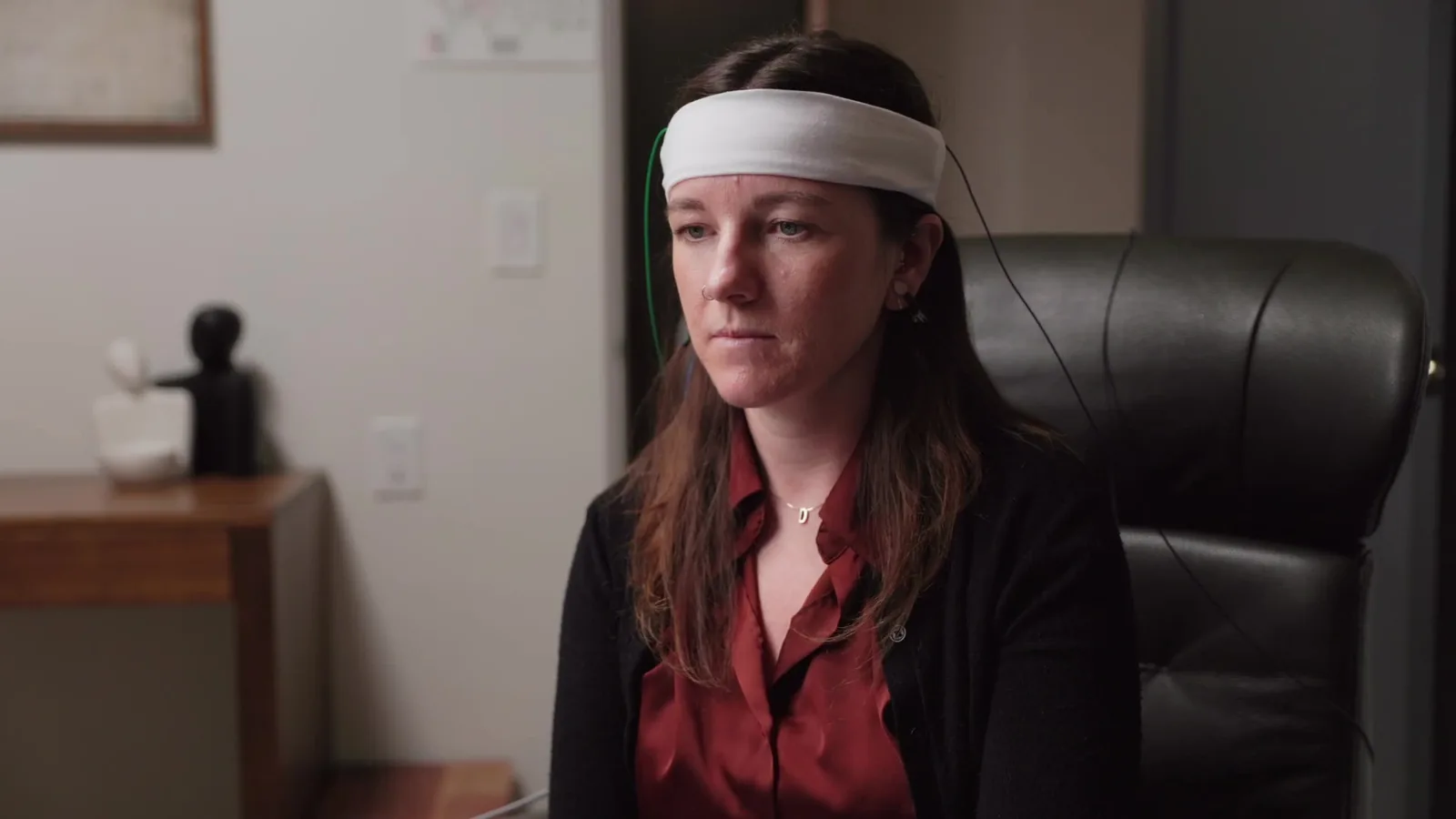
Small sensors rest on the scalp and record the brain's electrical activity, the same signal an EEG measures. Software turns that signal into something you can see or hear, such as a picture that sharpens or a tone that plays when your brain produces the pattern the session is training toward. Over many sessions, people learn to produce that pattern more readily. Nothing is sent into the brain; the equipment only listens. That loop of measuring, feeding back and practicing is the core of how neurofeedback works, whatever it is being used for.
Why Addiction Research Looks at the Brain's Own Signals
The National Institute on Drug Abuse describes addiction as a chronic, relapsing disorder, and considers it a brain disorder because it involves changes to the circuits that handle reward, stress and self-control. Those changes can last well after someone stops using. That framing is why researchers began asking whether training the brain to regulate itself could help with the things that make early recovery hard: craving, stress and staying focused on treatment.
Most of the older work used a method called alpha-theta training, sometimes preceded by training aimed at attention. Newer studies also use fMRI neurofeedback, where people see activity in a specific brain region and try to change it. The two are different tools, and the research on them is reviewed separately.
What the Studies Found So Far
Reviews that lean positive, with caveats
A 2008 review that rated the evidence by the field's own standards called alpha-theta training "probably efficacious" when it was combined with residential treatment programs, for alcohol and for stimulant or mixed substance use. That is a middle rating, below the top tier. More recent reviews point the same way. A 2025 systematic review of 32 studies found that reduced craving was the most common result and concluded that neurofeedback shows promise as an adjunct to standard care. A 2025 meta-analysis of 17 randomized trials, with 662 participants in total, found a significant effect on addiction symptoms, while noting large differences between the studies in how neurofeedback was delivered.
The fMRI work is less settled. A 2024 review of 16 studies described the evidence for changes in brain function and craving as early and inconsistent, and called for placebo-controlled trials.
The 2005 trial behind the most quoted number
Much of what you read about neurofeedback and addiction traces back to one randomized trial published in 2005. It enrolled 121 adults in an inpatient substance use program. Those assigned to neurofeedback received 40 to 50 sessions on top of treatment; the comparison group received extra time in the regular program instead. The neurofeedback group stayed in treatment significantly longer, and a year later abstinence was higher among the people who had completed the full protocol.
Those details matter. The abstinence figure counted people who finished the protocol, not everyone who started. The comparison group did not receive a sham version of neurofeedback, so expectation and attention could account for part of the difference. And the psychological changes the study reported were on 5 of 10 scales of a personality inventory, not across the board. Many summaries repeat the abstinence figure without those qualifiers. The trial is a reasonable reason for interest. It is not proof that neurofeedback keeps people sober.
Trials that found little added benefit
Some careful studies came back mostly empty. In a 2022 randomized trial of 93 adults in outpatient substance use treatment in Norway, 20 sessions of neurofeedback added to usual care made no difference to quality of life, drug use, sleep, anxiety or depression; the only measurable change was less restlessness. A 2018 randomized trial of 42 patients found neurofeedback plus usual care was no more effective than usual care alone for craving, impulsivity or drug use. A 2018 review summed up the problem: decades of work have produced too few well-designed trials to draw firm conclusions.
Put together, the research says neurofeedback may help some people with craving and with staying in treatment, that results depend heavily on how it is delivered, and that nobody can yet say who will benefit.
Is It a Replacement for Therapy or Medication?
No. Every trial described here tested neurofeedback alongside regular treatment, never instead of it. The National Institute on Drug Abuse notes that substance use disorders are treatable and that there are safe, effective medications and behavioral therapies for them. Neurofeedback, at its best in the current research, adds to that work.
That shapes what to expect. Neurofeedback is something you would add to a plan that already includes therapy, and judge by how you are doing over weeks, not by a figure from a study. If you are considering it, ask what it is meant to help with in your case and how progress will be judged. A good clinic answers both plainly, and who runs and supervises the sessions matters just as much when choosing a neurofeedback provider. If you take medication for substance use or a related condition, any change to it is a decision to make with the prescriber, whatever else you add.
How Neurofeedback Fits Into Care at Redefine
Redefine Wellness & Treatment is an outpatient center in Scottsdale for adults, and substance use is among the conditions it treats. Neurofeedback is an integral part of treatment there, and how much of it each person receives varies with their treatment plan, which is built after an assessment. For substance use it remains an active area of research, so neurofeedback at Redefine is used next to individual therapy, group work and the other care the plan calls for, never on its own.
A day in Redefine's intensive outpatient program may include neurofeedback among its other blocks, though not every client has every modality each day.
If you are in distress or experiencing a mental health crisis, please call or text 988, or go to the nearest emergency department.
Neurofeedback is noninvasive, since the sensors only record activity, and studies generally describe it as well tolerated. It is not free of side effects. In a sham-controlled study, most participants reported some short-lived effects during training, and reviews list headache, drowsiness and nausea among the more common ones. Poorly chosen training can also cause unwanted effects, which is why it should be run and adjusted by a qualified clinician.
The trials described here used between 20 and 50 sessions, and one review of alcohol studies only included programs of at least 10. That range reflects research protocols, not a standard course. At Redefine, how much neurofeedback someone receives depends on their treatment plan, so there is no fixed number to expect before an assessment.
Not in any way the research can show yet. The 2008 review gave the same middle rating to EEG neurofeedback programs for alcohol and for stimulant or mixed substance use, in both cases combined with residential treatment. The fMRI studies have covered alcohol, tobacco and cocaine, but their results on craving are still inconsistent, so it is too early to rank one substance above another.
Possibly, though the evidence is mixed. The 2005 inpatient trial reported improvements on several psychological scales, while the 2022 outpatient trial found no difference in anxiety or depression. Neurofeedback for depression and anxiety is itself an active area of research, so it is best treated as one part of care for those symptoms, alongside therapy.
No. A qEEG is a recording that maps brain activity for assessment, while neurofeedback is a training process that uses live feedback over many sessions. They use similar sensors, which is why they get confused. At Redefine, qEEG brain mapping is available on request and is separate from neurofeedback, not a standard part of the programs.